


Travel TipsIstanbul5 October 202610 min read
Istanbul vs Constantinople: Why the Name Changed, What Remains
Same city, two names: Constantinople from 330, Istanbul made official by the 1930 postal law. Where to see Byzantine walls, mosaics and churches in 2026.
In this article
- Is Istanbul the same as Constantinople?
- Why was Constantinople renamed Istanbul?
- What remains of Constantinople in Istanbul today
- Istanbul vs Constantinople: what changed after 1453
- How to see Byzantine Constantinople in one or two days
- Istanbul vs Constantinople: which name should you use?
- Travelling from abroad to Istanbul
- Frequently Asked Questions
Istanbul and Constantinople are the same city: it was named Constantinople in 330, Turks and Arabs were already calling it Istanbul by the Middle Ages, and the Turkish postal law of 28 March 1930 made the world switch by refusing letters addressed to the old name. So Istanbul vs Constantinople is not a choice between two places but between two names, and between two periods of one city's history. To see the Hippodrome of Constantinople and Hagia Sophia with a guide, our full-day Old City tour from $199 includes entrance tickets and a lunch stop.
Stand at the top of the Hippodrome in Sultanahmet and you can see both at once. In front of you is an Egyptian obelisk that the emperor Theodosius set up for the chariot races in 390. Behind you is the Blue Mosque, finished in 1617. Between them, tram bells, simit sellers and tour groups. Constantinople did not disappear in 1453; it was built over, renamed slowly, and much of it is still there if you know where to look. Hagia Sophia, built in Constantinople under Justinian, is covered stop by stop on our Hagia Sophia guided tour page.
Is Istanbul the same as Constantinople?
Yes. The city on the Bosphorus has had three main names:
| Name | Period | Who used it |
|---|---|---|
| Byzantion (Byzantium) | Seventh century BC to 330 | Greek colonists from Megara and their successors |
| Constantinople (Konstantinoupolis) | 330 to 1930 in official and international use | Byzantines, then Ottomans as Kostantiniyye, and Europeans |
| Istanbul | In everyday Turkish use for centuries; official from the Republic | Turks, Arabs and, after 1930, everyone |
The traditional story is that Greek settlers from Megara founded Byzantion in the seventh century BC under a leader called Byzas. In 330 the emperor Constantine made it the new capital of the Roman Empire and dedicated it on 11 May as Constantinople, the city of Constantine. People also called it New Rome, and the Orthodox Ecumenical Patriarch still carries the title Archbishop of Constantinople, New Rome.
Why was Constantinople renamed Istanbul?
The short answer is that it was not renamed in one day. Two names lived side by side for almost five hundred years.
After Mehmed II took the city on 29 May 1453, the Ottomans kept the old name in their own form, Kostantiniyye, on coins and official documents. At the same time, ordinary speakers of Turkish used İstanbul. Most historians trace that word to the medieval Greek phrase eis tin polin, "to the city" or "in the city", which is how Greeks in the region spoke of going to Constantinople, the only city that needed no name. A third, punning version, Islambol, "full of Islam", appeared in some Ottoman texts but never replaced the others.
When the Republic of Türkiye was founded in 1923, the capital moved to Ankara, and the new state wanted Turkish names for Turkish places. The decisive step came with the postal law of 28 March 1930, which told foreign senders to use Istanbul; mail addressed to Constantinople was not delivered. Within a few years atlases, shipping lines and embassies had changed. In English the older form "Stamboul" survived for a while for the historic peninsula, and Greek still calls the city Konstantinoupoli today.
The well-known 1953 pop song by The Four Lads made the change famous in the English-speaking world, decades after it happened.
What remains of Constantinople in Istanbul today
More than most visitors expect, and this is where Istanbul vs Constantinople becomes a practical question for a sightseeing day. The historic peninsula between the Golden Horn and the Sea of Marmara was the walled city of Constantinople, and UNESCO listed its historic areas in 1985. These are the Byzantine places you can still see, roughly in order of how easy they are to visit.
| Byzantine site | Built | What you see today | Visiting in 2026 |
|---|---|---|---|
| Hagia Sophia | 537 | The great domed church, a mosque again since 2020 | €25 for foreign visitors; from 14:30 on Fridays |
| Basilica Cistern | 532 | An underground reservoir with 336 columns | 1,950 TL in the daytime |
| Hippodrome | Second to fourth century | Obelisk of 390, Serpentine Column, Walled Obelisk | Free, open square |
| Hagia Irene | Rebuilt in the sixth century | A church never turned into a mosque | Inside the Topkapı grounds; included in the 2,750 TL palace ticket with the Harem |
| Chora (Kariye) | Mosaics from about 1315 to 1321 | Some of the finest late Byzantine mosaics anywhere | €20 for foreign visitors; closed to tourist visits on Fridays |
| Theodosian Walls | From 413 | Land walls with towers from the Marmara to the Golden Horn | Free to walk along outside |
| Little Hagia Sophia | 527 to 536 | An early church, now a working mosque | Free, outside prayer times |
| Valens Aqueduct | Completed in 368 | Two-tier arches over Atatürk Boulevard | Free, seen from the street |
Hagia Sophia: where the two names meet
Hagia Sophia is the building that holds both names in one room. It was the cathedral of Constantinople for more than nine hundred years, the largest church in the world for nearly a thousand, and in 1453 it became the imperial mosque of Istanbul. Under the dome you see Christian mosaics of the Virgin and Child next to the huge Ottoman roundels with the names of God, the Prophet and the first caliphs.
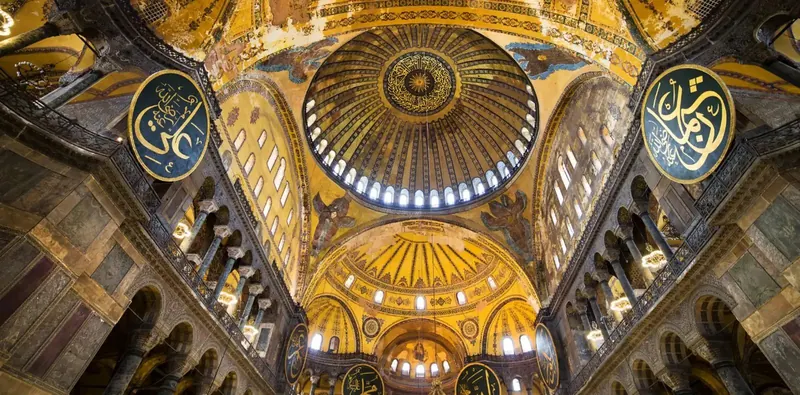
For foreign visitors the ticket costs €25 in 2026 and leads to the upper gallery, where the best mosaics are, including the Deësis panel of Christ with the Virgin and John the Baptist. The ground floor is for prayer. Our guide to Hagia Sophia tickets today explains queues and timing, and the Hagia Sophia page covers its history in more detail.
The Theodosian Walls
If you want to feel the size of Constantinople, go to its land walls. Theodosius II's government built them from 413, and they ran for about six and a half kilometres from the Sea of Marmara to the Golden Horn, with a moat, an outer wall and an inner wall of large towers. They held off attackers for a thousand years until Mehmed II's cannons broke through near the Gate of St Romanus in 1453.
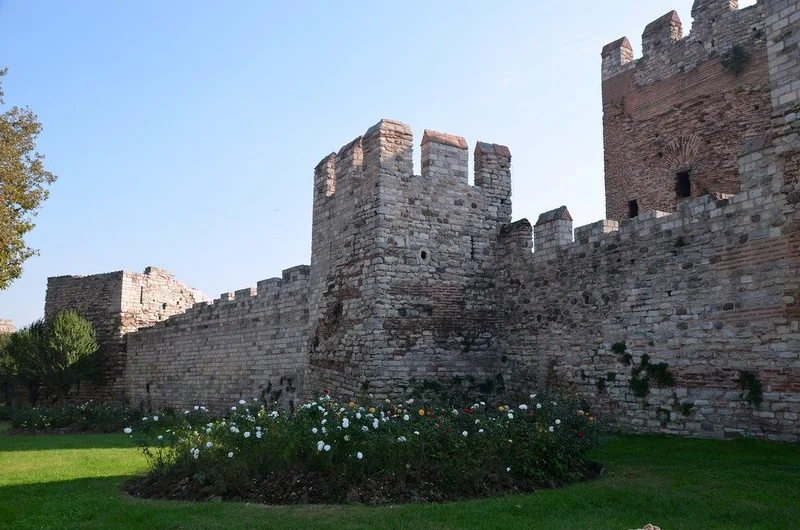
Some sections have been heavily restored and others are bare ruins with vegetable gardens at their feet. The walls are not a single site with a ticket; you reach them by tram to Topkapı or by taxi to Edirnekapı, and walk. Go in daylight and with company, as some stretches are isolated.
Chora: the mosaics most visitors miss
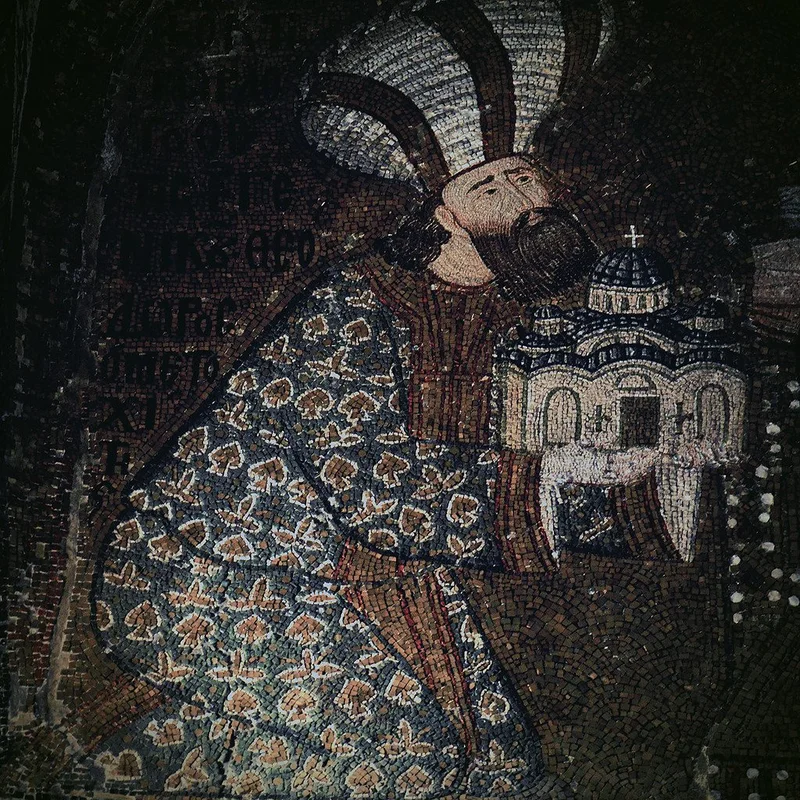
The Chora church, near Edirnekapı, has a cycle of mosaics and frescoes made between about 1315 and 1321, when the statesman Theodore Metochites rebuilt it. He appears in one panel himself, in a tall hat, offering a model of the church to Christ. Chora reopened as the Kariye Mosque in 2024; foreign visitors pay €20, and the building is closed to tourist visits on Fridays. See our Chora Church guide before you go.
Istanbul vs Constantinople: what changed after 1453
The Ottomans did not erase Byzantine Constantinople; they repurposed it. Churches became mosques, and minarets were added to Hagia Sophia. The Hippodrome kept its monuments but lost its races and became a ceremonial square. The palace of the sultans, Topkapı, was built from the 1460s on the old acropolis of Byzantion, with Hagia Irene left standing in its first courtyard.
What the Ottomans added is what most people now picture when they hear "Istanbul": the skyline of domes and minarets designed largely by the architect Sinan in the sixteenth century, the Grand Bazaar, the Spice Bazaar and later the palaces along the Bosphorus. The city stayed cosmopolitan. Greek, Armenian, Jewish and Levantine communities kept their churches and synagogues, and the Ecumenical Patriarchate still sits at Fener on the Golden Horn.

How to see Byzantine Constantinople in one or two days
Day one, the imperial centre. Start early at the Hippodrome, which is an open square, then the Basilica Cistern before the queue builds. Visit Hagia Sophia, and in the afternoon Topkapı Palace with Hagia Irene; remember that Topkapı is closed on Tuesdays. End at Little Hagia Sophia, a ten-minute walk downhill, which few tour groups reach.
Day two, the edges of the city. Take a taxi to Chora in the morning, then walk to the land walls at Edirnekapı. Continue to Fener and Balat for the Patriarchate and the Bulgarian Iron Church, then cross to the Valens Aqueduct on the way back.
A guide makes a large difference here, because so much of Constantinople is fragments. Our private Topkapı Palace, Harem and Basilica Cistern tour takes four to five hours and includes fast-track museum tickets, from $190. For a day built around Byzantine and later Christian Istanbul, our active churches tour with a private guide runs for seven hours with a private van and tickets included, from $180. If you want to set your own route over one to three days, the best of Istanbul private guided tour costs from $199 per group per day for the guide, with tickets paid separately. Prices change with the season and group size, so write to us for the price on your dates. Topkapı Palace with the Harem and the Archaeology Museums, where many Byzantine finds are kept, are both covered by the Istanbul museum pass, while Hagia Sophia and the Basilica Cistern are not.
Istanbul vs Constantinople: which name should you use?
Use Istanbul. It is the official name, the one on your ticket, your visa and every road sign, and Turks may find the old name odd in ordinary conversation. Use Constantinople when you mean the Byzantine city before 1453, as historians do, or when talking about the Orthodox Patriarchate, which still uses it in its title.
The official name of the country changed too. Since 2022 Türkiye has asked international organisations to use "Türkiye" rather than "Turkey", and the United Nations adopted it that year. In everyday English both are understood.
Travelling from abroad to Istanbul
Most visitors fly into Istanbul Airport on the European side or Sabiha Gökçen on the Asian side. We checked entry rules on 4 October 2026; confirm with official sources before you book.
- United States, United Kingdom, Canada and Australia. Ordinary passport holders can visit Türkiye without a visa for up to 90 days in any 180, according to the Turkish Ministry of Foreign Affairs.
- India and Pakistan. A visa is needed; holders of a valid Schengen, US or UK visa or residence permit can usually apply for the Turkish e-Visa online.
- Saudi Arabia. Saudi ordinary passport holders are visa-exempt for up to 90 days within six months.
Many travellers pair Istanbul with Italy or Greece on the same trip; our Istanbul vs Rome comparison follows the Roman story from the old capital to the new one.
For all our day tours see Istanbul tours, and for neighbourhoods and practical basics the Istanbul destination guide. If Istanbul is the first stop of a longer trip, our Turkey itinerary for 7 days sets out three week-long routes from Istanbul, to Cappadocia or to Ephesus and Pamukkale.
Frequently Asked Questions
Is Istanbul the same as Constantinople?
Yes. Constantinople was the name of the city from 330, when Constantine made it the capital of the Roman Empire, and it stayed in official use under the Ottomans as Kostantiniyye. Istanbul was the everyday Turkish name for centuries and became the only official name under the Republic.
When did Constantinople become Istanbul?
There is no single date. The Ottoman conquest was on 29 May 1453, but the city kept its old name in official use. The Republic adopted Istanbul in the 1920s, and the postal law of 28 March 1930 made foreign senders use it.
Why did Constantinople change its name to Istanbul?
The new Turkish Republic wanted Turkish names for its cities and dropped the Ottoman form Kostantiniyye. Istanbul was already the name most Turkish speakers used, probably from the medieval Greek phrase eis tin polin, meaning "to the city".
What was Istanbul called before Constantinople?
Byzantion, or Byzantium in Latin. It was a Greek city founded in the seventh century BC by settlers from Megara. Constantine refounded it as Constantinople in 330.
What is left of Constantinople today?
A great deal: Hagia Sophia, the Basilica Cistern, the Hippodrome monuments, Hagia Irene, the Chora mosaics, Little Hagia Sophia, the Valens Aqueduct and long stretches of the Theodosian land walls, all within Istanbul's historic peninsula.
Do Greeks still call Istanbul Constantinople?
Yes. In Greek the city is still Konstantinoupoli, often shortened to "the City", and the Ecumenical Patriarch's title is Archbishop of Constantinople, New Rome. In Turkish and in international use the name is Istanbul.
Written by the Get Istanbul Tours team: licensed local guides and trip planners based in Istanbul.
Leave a Comment
Private tours in Istanbul
Istanbul Old City Full-Day Tour, Tickets & Lunch Included
A full-day small-group tour of Hagia Sophia, the Blue Mosque, Hippodrome, Topkapi Palace, Hagia Irene and the Grand Bazaar.
Private Basilica Cistern Tour, Optional Topkapi & Hagia Sophia
The Basilica Cistern with your own licensed private guide and the entrance ticket included, with optional Topkapi Palace and Hagia Sophia visits.
Related articles
 Where to Stay
 in Istanbul with Kids (2027): 7 Family Areas Ranked, with Tour Pickup Notes
Sultanahmet for a first family trip, Beşiktaş or Nişantaşı for longer stays: seven Istanbul areas ranked for strollers, quiet nights, parks and tour pickup.
Read More Where to Stay
 in Istanbul for New Year's Eve 2027: 6 Areas Ranked
Six Istanbul areas ranked for New Year's Eve: fireworks views, getting home after midnight, noise, and the cruise or yacht plan that fits each one.
Read More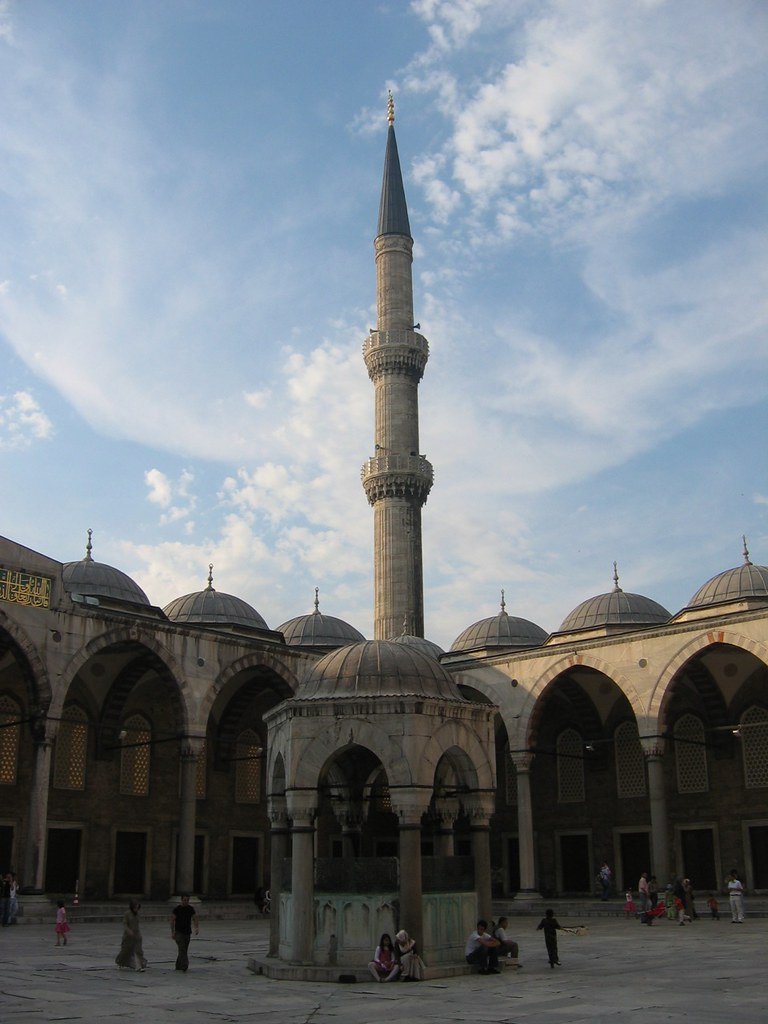 Prices & Costs
Private Tour vs Group Tour in Istanbul: 2027 Prices for 1 to 6 People
Group tours win for solo travellers, couples come out about even, and private guides win from three people up. Our 2027 prices for 1 to 6 travellers, tickets counted.
Read More