 Istanbul
Spice Bazaar (Egyptian Bazaar)
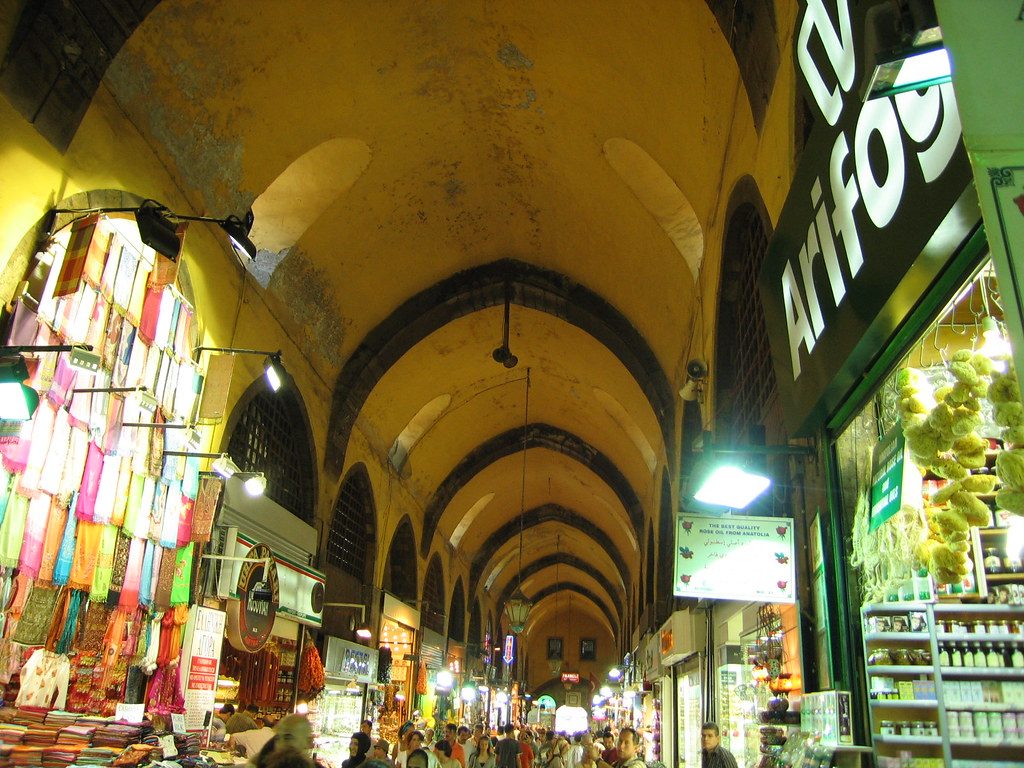
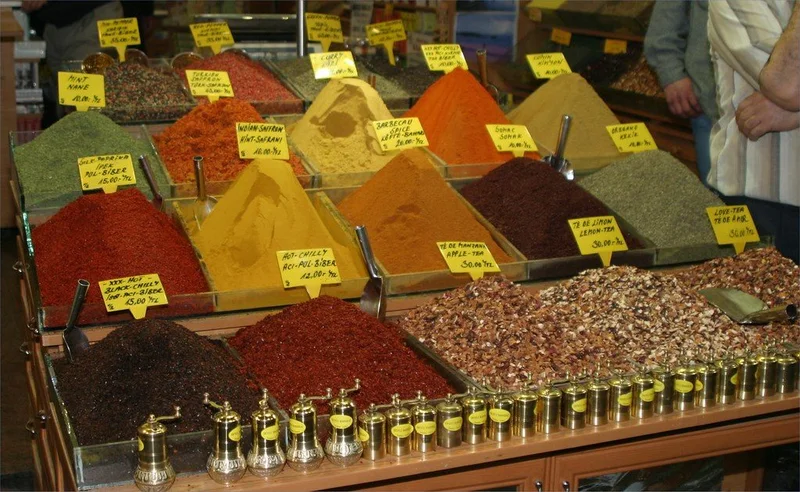
The Spice Bazaar is a 17th-century covered market in Eminonu, smaller and easier than the Grand Bazaar, selling spices, Turkish delight, dried fruit, tea and nuts. It is free and, unlike the Grand Bazaar, open on Sundays.
Tours that visit Spice Bazaar
Best of Istanbul Private Tour, 1-3 Days with Professional Guide
A licensed private guide for 1, 2 or 3 days in Istanbul: the Old City, the Bosphorus and the Golden Horn, planned around your interests.
Grand Bazaar & Spice Market Private Shopping Tour, Best Value
Shop the Grand Bazaar and the Spice Market with a local guide who knows the trusted vendors and fair prices.
The Spice Bazaar is open every day from about 09:00 to 19:00, Sundays included, and there is no ticket. That makes it the fallback when the Grand Bazaar is shut. It is also much smaller: an L-shaped hall of roughly 85 shops that you can walk end to end in ten minutes, although few people manage it that fast.
Quick facts
| Item | Details |
|---|---|
| Opening hours | Daily about 09:00-19:00 (as of October 2026) |
| Closed | During Ramadan Bayram and Kurban Bayram holidays |
| Ticket for foreign visitors | Free |
| Time needed | 45 minutes to 1.5 hours with the surrounding streets |
| Location | Eminonu, next to the New Mosque and the Galata Bridge. Tram T1 to Eminonu, or any ferry to Eminonu pier |
| Dress code | None for the market; the New Mosque next door asks for covered shoulders and knees |
A short history
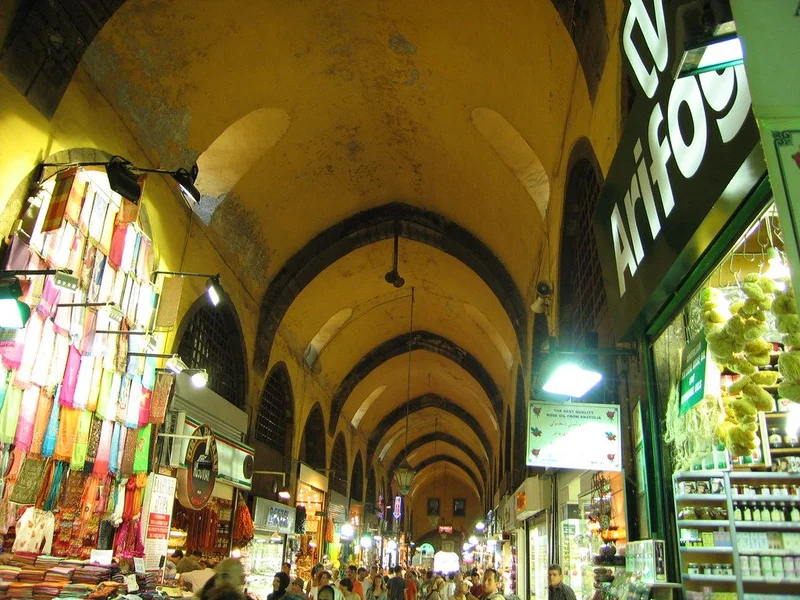
The market was completed in 1664 as part of the New Mosque complex, whose rents paid for the mosque's upkeep. Its Turkish name, Misir Carsisi, means Egyptian Bazaar, because taxes from Ottoman Egypt helped fund it and many of its goods arrived on ships from Cairo. For centuries it was where Istanbul's pharmacists and herbalists bought their stock. Spices still dominate, but Turkish delight, nuts and souvenirs now take up as much space.
What to buy
- Spices: sumac, pul biber (Aleppo-style chilli flakes), isot pepper, cumin and saffron. Ask for vacuum packing if you are flying.
- Turkish delight (lokum) in dozens of flavours. Pistachio and plain rose are the classics; double-roasted pistachio is the premium one.
- Dried fruit and nuts: Antep pistachios, dried apricots from Malatya, figs and mulberries.
- Tea: apple tea is mostly for tourists; Rize black tea is what Turks drink.
- Pestil and kome, sheets and strings of dried fruit paste, sold on the outer streets.
Saffron sold cheaply in large bags is almost always safflower. Real saffron costs real money and comes in small boxes by the gram.
Around the bazaar
The streets outside matter as much as the hall. On the west side, Hasircilar Caddesi has cheese and olive shops, a coffee roaster where locals queue for ground Turkish coffee, and a knife and kitchenware lane. The small Rustem Pasha Mosque, five minutes away up a staircase from the market street, has some of the finest Iznik tiles in the city and is rarely crowded. The courtyard of the New Mosque is next door, and the Galata Bridge, with its fishermen, starts across the road.
Best time to visit
Weekday mornings are the easiest. On Saturdays and Sunday afternoons the hall fills with local families, and in late afternoon ferry commuters crowd the outer streets. The market is at its busiest before holidays, when people stock up on nuts and sweets.
Our Istanbul Private Shopping Tour: Grand Bazaar & Spice Market spends four hours on both markets with a guide who knows which vendors weigh honestly. The Istanbul Dolmabahce & Bosphorus Tour with Private Guide also begins here before the cruise.
Tips
- Prices are usually per kilo on the sign. Ask for 100 or 250 grams; nobody minds.
- Tasting is normal. Buying after tasting is not compulsory.
- Shops inside the hall are more expensive than those on Hasircilar Caddesi for the same nuts and spices.
- Many shops take cards, but cash can get you a small discount.
- Pickpockets work the crowd at the Eminonu tram and ferry area. Keep your phone in a front pocket.
- Some spices and seeds are restricted by customs in Australia, New Zealand and the United States. Check your home country's rules before buying large amounts.
See what else to combine with Eminonu on our Istanbul destination page.
Frequently Asked Questions
Is the Spice Bazaar open on Sunday?
Yes. The Spice Bazaar opens daily from about 09:00 to 19:00, Sundays included. It closes only during the main religious holidays.
Which is better, the Grand Bazaar or the Spice Bazaar?
They do different jobs. The Spice Bazaar is smaller and focused on food and spices, so it is easier to see in under an hour. The Grand Bazaar is far larger and better for carpets, jewellery, leather and ceramics.
Is the Spice Bazaar expensive?
Prices inside the main hall are higher than in the surrounding streets. For the same pistachios or spices, the shops on Hasircilar Caddesi just outside are usually cheaper.
Why is it called the Egyptian Bazaar?
It was funded partly by taxes from Ottoman Egypt, and many of its goods came from Cairo by sea. The Turkish name, Misir Carsisi, means Egyptian Bazaar.
Can I take spices home from Istanbul?
Usually yes, in sealed or vacuum-packed bags. Some countries restrict seeds, plant products or large quantities, so check your customs rules before you buy.
More places to see in Istanbul
- Balat and Fener (Fener and Balat)
- Basilica Cistern (Yerebatan)
- Beylerbeyi Palace
- Blue Mosque (Sultanahmet Mosque)
- Bosphorus Strait (Bosphorus Cruise)
- Camlica Hill and Camlica Mosque
- Chora Church (Kariye Mosque)
- Dolmabahce Palace
- Emirgan Park
- Fatih Mosque
- Fener Greek Orthodox Patriarchate (Aya Yorgi)
- Galata Bridge and Eminonu
- Galata Tower
- Grand Bazaar (Kapalıçarşı)
- Hagia Irene (Aya Irini)
- Hagia Sophia (Ayasofya)
- Hippodrome of Constantinople (Hippodrome Square)
- Istanbul Archaeology Museums
- Istanbul Modern
- Istiklal Avenue and Taksim (Istiklal Street)
- Kadikoy and Moda
- Little Hagia Sophia (Kucuk Ayasofya)
- Maiden's Tower (Kız Kulesi)
- Miniaturk
- Nuruosmaniye Mosque
- Ortakoy Mosque (Buyuk Mecidiye Mosque)
- Pera Museum
- Pierre Loti Hill and Eyup Sultan Mosque
- Princes' Islands (Adalar)
- Rumeli Fortress (Rumelihisarı)
- Rustem Pasha Mosque
- Suleymaniye Mosque
- Sultanahmet Square
- Topkapi Palace
- Turkish-Islamic Arts Museum (Ibrahim Pasha Palace)
- Yildiz Palace and Yildiz Park