

 Istanbul
Fatih Mosque
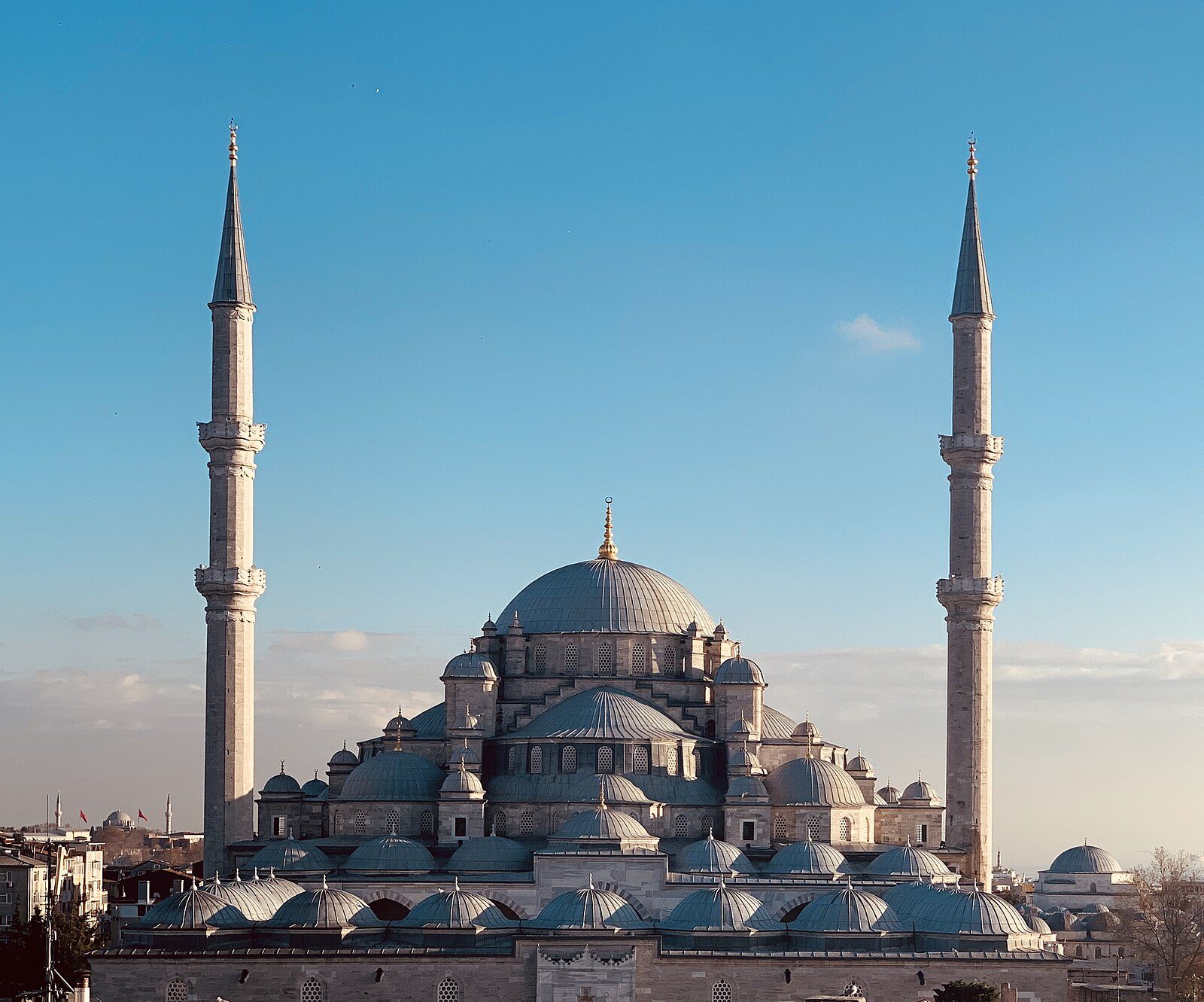
Fatih Mosque is the mosque of Mehmed the Conqueror, first built in the 1460s on the site of the Byzantine Church of the Holy Apostles and rebuilt after an earthquake in 1766. The sultan is buried in its garden. Entry is free outside prayer times.
Here is a common mistake: many visitors assume the mosque of Mehmed the Conqueror is one of the famous domes in Sultanahmet. It is not. It stands on the fourth hill of the old city, in the busy, conservative district that carries his name, Fatih. The first mosque on this site was the largest Ottoman building of its time. The one you see now is its 18th-century replacement, and the Conqueror himself lies in a tomb behind it.
Quick facts
| Item | Details |
|---|---|
| Opening hours | Open daily from morning to evening prayer; tourist visits pause during prayers |
| Closed | To visitors during the five daily prayers and on Friday until about 14:30 |
| Ticket | Free; the tomb of Mehmed II is also free |
| Time needed | 45 minutes including the tomb |
| Location | Fatih district, about 2 km west of the Grand Bazaar |
| Dress code | Shoulders and knees covered; women cover their hair |
History
After taking Constantinople in 1453, Mehmed II chose the site of the Church of the Holy Apostles for his imperial mosque. That church had been the burial place of Byzantine emperors since Constantine the Great. The architect Atik Sinan built the mosque between 1463 and 1470, with a huge complex around it: eight madrasas, a hospital, a caravanserai, a soup kitchen, a library and baths.
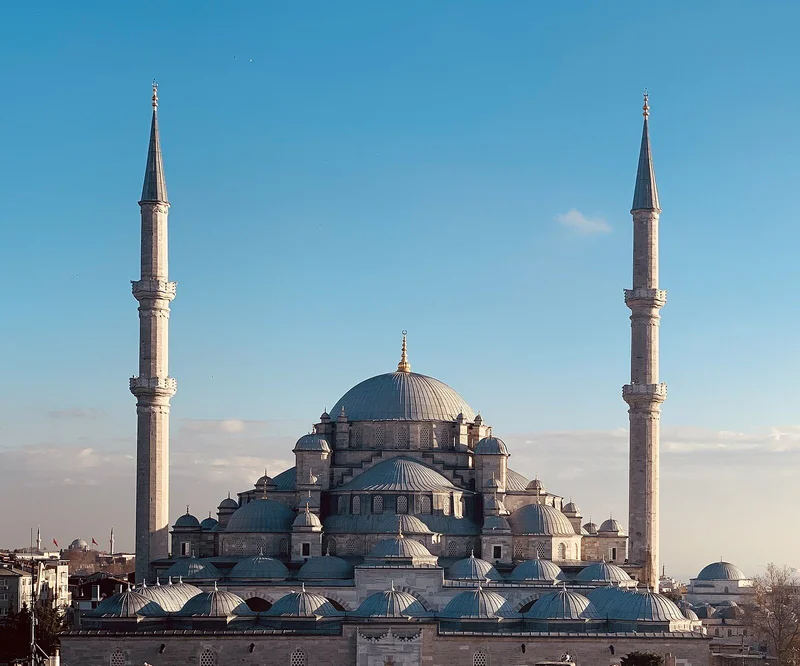
In 1766 a strong earthquake brought down the dome. Sultan Mustafa III had the mosque rebuilt by 1771, but with a new plan: a central dome supported by four half domes, in place of the original design. Parts of the first building survive, including the courtyard, the main gate and the lower parts of the minarets. The rebuilt mosque is therefore a mix: an 18th-century prayer hall behind a 15th-century courtyard.
Mehmed II was buried in a tomb behind the mosque in 1481. The present tomb also dates from after the earthquake. His wife Gulbahar Hatun, mother of Bayezid II, is buried in a smaller tomb nearby.
What to see
- The prayer hall. A bright interior under a central dome and four half domes, with painted decoration from later restorations.
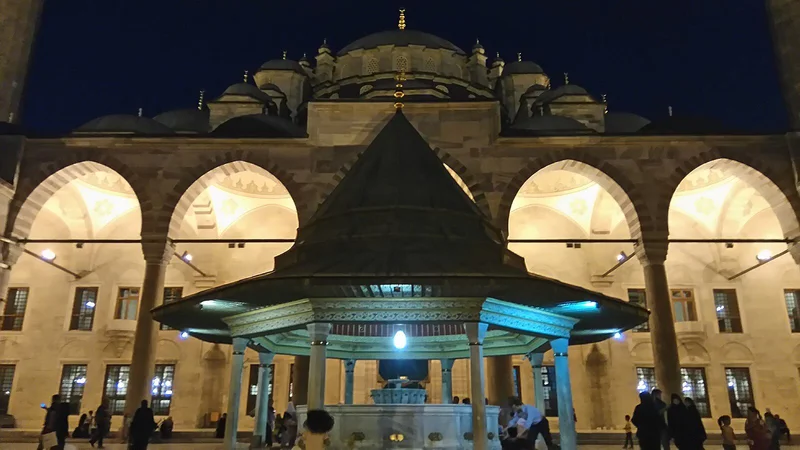
- The courtyard. An arcaded courtyard from the 15th-century building, with old cypress and plane trees and a domed fountain in the middle.
- The tomb of Mehmed II. A domed Baroque tomb in the garden where the Conqueror is buried. Many Turkish visitors come to pray here.
- The complex. Parts of the old madrasas still line the square around the mosque, some now used by schools and foundations.
The Wednesday market
On Wednesdays, the streets of the nearby Carsamba area fill with one of the biggest open-air markets in Istanbul. Stalls sell fruit, vegetables, cheese, household goods and clothes. It is lively, cheap and very local. Exact streets and times vary, so ask at your hotel or check before you go.
Best time to visit
Late morning on weekdays is calm. Fridays are very busy with worshippers. The area is conservative, so dress with extra care. Combining the mosque with the Wednesday market gives the best feel for everyday life in the old city.
None of our tours lists Fatih Mosque by name. With a private guide, the Best of Istanbul Private Guided Tour can include it on a day through the Golden Horn districts, from US$199 per day. The Private Istanbul Heritage Tour: Ottoman & Byzantine Highlights focuses on the great Ottoman and Byzantine monuments, from US$200 for six to eight hours, and a guide can plan a stop here.
Getting there
Several city buses run from Eminonu and Aksaray to Fatih. From the Suleymaniye Mosque, a walk of about 20 minutes west passes the Valens Aqueduct. The Chora Church is another 20 minutes on foot beyond Fatih.
Tips
- See the Valens Aqueduct, a Roman water channel from the 4th century, on the way.
- Try the simple local restaurants around the square, which serve home-style stews at prices far below Sultanahmet.
- Keep an eye on your belongings in the Wednesday market crowds.
- Photos are fine in the courtyard; inside, avoid photographing people at prayer.
- Visit Chora Church the same day for Byzantine mosaics.
Frequently Asked Questions
Is Fatih Mosque free to visit?
Yes. There is no ticket for the mosque or the tomb of Mehmed II. Visits pause at prayer times.
Is the original mosque of Mehmed the Conqueror still standing?
Only in parts. An earthquake in 1766 destroyed most of it, and the present mosque was rebuilt by 1771 on a new plan.
Where is Mehmed the Conqueror buried?
In a domed tomb in the garden behind Fatih Mosque. Visitors may enter respectfully.
What was on the site before Fatih Mosque?
The Byzantine Church of the Holy Apostles, burial place of many Byzantine emperors, stood here until after 1453.
When is the Fatih Wednesday market?
Every Wednesday, in the streets of the Carsamba area close to the mosque, from morning into the afternoon.
More places to see in Istanbul
- Balat and Fener (Fener and Balat)
- Basilica Cistern (Yerebatan)
- Beylerbeyi Palace
- Blue Mosque (Sultanahmet Mosque)
- Bosphorus Strait (Bosphorus Cruise)
- Camlica Hill and Camlica Mosque
- Chora Church (Kariye Mosque)
- Dolmabahce Palace
- Emirgan Park
- Fener Greek Orthodox Patriarchate (Aya Yorgi)
- Galata Bridge and Eminonu
- Galata Tower
- Grand Bazaar (Kapalıçarşı)
- Hagia Irene (Aya Irini)
- Hagia Sophia (Ayasofya)
- Hippodrome of Constantinople (Hippodrome Square)
- Istanbul Archaeology Museums
- Istanbul Modern
- Istiklal Avenue and Taksim (Istiklal Street)
- Kadikoy and Moda
- Little Hagia Sophia (Kucuk Ayasofya)
- Maiden's Tower (Kız Kulesi)
- Miniaturk
- Nuruosmaniye Mosque
- Ortakoy Mosque (Buyuk Mecidiye Mosque)
- Pera Museum
- Pierre Loti Hill and Eyup Sultan Mosque
- Princes' Islands (Adalar)
- Rumeli Fortress (Rumelihisarı)
- Rustem Pasha Mosque
- Spice Bazaar (Egyptian Bazaar)
- Suleymaniye Mosque
- Sultanahmet Square
- Topkapi Palace
- Turkish-Islamic Arts Museum (Ibrahim Pasha Palace)
- Yildiz Palace and Yildiz Park