

Prices & CostsIstanbul10 November 202619 min read
Grand Bazaar Prices 2027: What 19 Things Cost and How to Bargain
Grand Bazaar prices in TL, euros and dollars for 19 items: lamps, ceramics, carpets, gold, saffron, towels. First quote vs fair price, bargaining steps, fakes, tax-free and customs.
In this article
- Grand Bazaar prices at a glance: quick facts
- How we built this price list (and what to trust)
- The 19-item Grand Bazaar price list
- Lamps, ceramics and textiles: what to pay and what to check
- Carpets and kilims: prices per piece and per square metre
- Gold, silver and jewellery: how Kapalıçarşı pricing works
- Spices, saffron and Turkish delight: per kilo and per gram
- Evil eyes, copper, backgammon and other small things
- How to bargain in the Grand Bazaar, step by step
- Commission shops, touts and guides: who is working for whom
- How to spot fakes before you pay
- Tax-free shopping, customs limits and sending a carpet home
- Take the guesswork out of the Grand Bazaar
- Frequently Asked Questions
Grand Bazaar prices in late 2026 run from about 50 TL for an evil-eye bracelet to well over 100,000 TL for a large hand-knotted carpet, and almost everything in between is quoted high on the first ask. The rule that holds across the guides we checked is to open at 40 to 50 percent of the first number and settle somewhere near 60 to 70 percent. The table below turns that into a price list of 19 items with a first-quote range, a fair-price range and approximate euro and dollar values.
If you would rather have someone who knows which shops sell honestly stand next to you while you haggle, our private Grand Bazaar and Spice Market shopping tour costs from $90 per person and runs about six hours. Our licensed guides do not push you into any shop and take no instructions from shopkeepers.
Grand Bazaar prices at a glance: quick facts
| Question | Short answer (November 2026) |
|---|---|
| Entry | Free, no ticket |
| Bargaining | Expected in the Grand Bazaar; open at 40 to 50 percent, settle near 60 to 70 percent |
| Best-value buys | Peshtemal towels, hand-painted ceramics, evil-eye beads, small mosaic lamps, Turkish delight |
| Most overpriced | Anything quoted before you have looked at the second shop; "silk" scarves; "antiques" |
| Cash or card | Cash in lira for small items; many shops add 3 to 5 percent for cards |
| Working rates used here | About 56 TL per euro (ECB, 2 November 2026) and about 48 TL per dollar (our rounded working rate) |
Hours, gates and closing days are covered in our Grand Bazaar opening hours and gates guide. In one line: the bazaar is shut on Sundays and on the two religious holidays, so do your shopping Monday to Saturday.
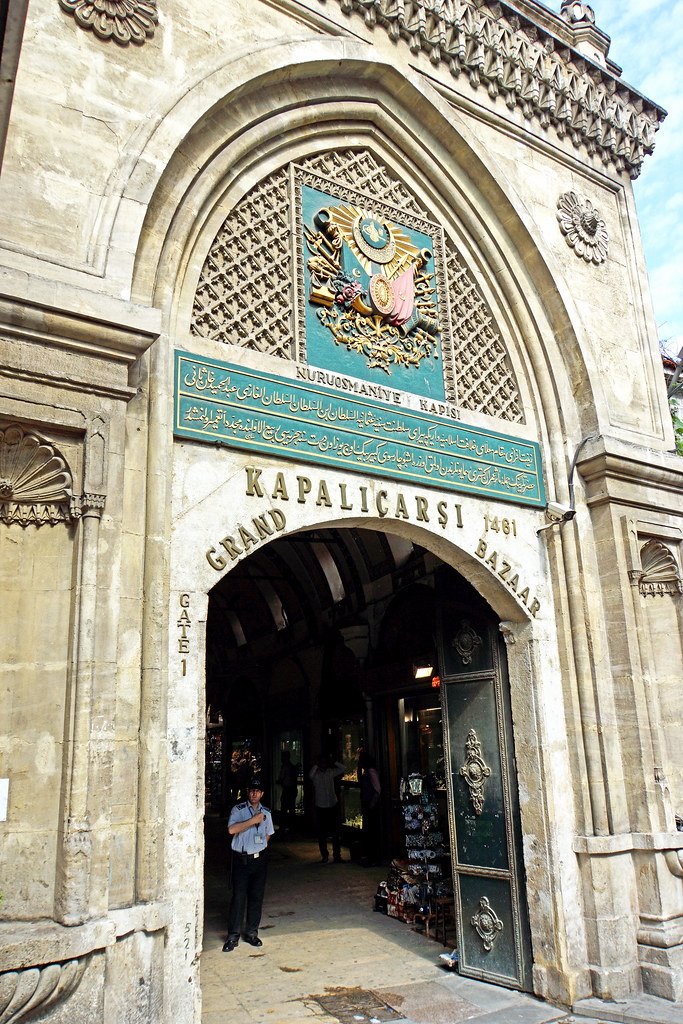
Most visitors enter at the Beyazıt or Nuruosmaniye gate, and the jewellers sit just inside both.
How we built this price list (and what to trust)
The lira has lost value steadily and shop prices move with it, so every number here is a dated snapshot, not a tariff. The lira ranges come from the spring 2026 Istanbul price guide on lostin.istanbul (last updated April 2026). The dollar ranges come from My Turkey Adventure's Grand Bazaar guide (published 21 May 2026, updated 15 October 2026). Gram gold comes from Bloomberg HT, which showed 6,458.27 TL buy and 6,459.24 TL sell for the free-market gram at 10:00 on 4 November 2026. Euro and dollar columns are our own conversions at the rates above.
The "first quote" column is the range the sources describe as the typical tourist asking price. The "fair price" column is our estimate after applying the 30 to 50 percent reduction those same guides report. Items without a dated 2025 or 2026 price are left out of the table. Expect November prices to sit at the upper end of the spring lira ranges, and prices fixed for 2027 will not be known until the new year.
The 19-item Grand Bazaar price list
| # | Item | Typical first quote | Fair price after bargaining | About (EUR / USD) |
|---|---|---|---|---|
| 1 | Small mosaic lamp, one globe | $35 to 60 (about 1,700 to 2,900 TL) | 800 to 1,500 TL | €14 to 27 / $17 to 31 |
| 2 | Medium or hanging mosaic lamp, several globes | $60 to 120 (about 2,900 to 5,800 TL) | 2,000 to 4,000 TL | €36 to 71 / $42 to 83 |
| 3 | Hand-painted İznik-style bowl or plate | $15 to 40 (about 720 to 1,900 TL) | 400 to 1,200 TL (large plates up to 3,500 TL) | €7 to 21 / $8 to 25 |
| 4 | Decal-printed ceramic copy | often quoted like the real thing | 80 to 150 TL at most | €1.50 to 2.70 / $2 to 3 |
| 5 | Peshtemal towel (cotton) | up to 700 TL | 250 to 500 TL | €4.50 to 9 / $5 to 10 |
| 6 | Small leather wallet | $25 to 70 (about 1,200 to 3,400 TL) | $25 to 45 (about 1,200 to 2,200 TL) | €21 to 39 / $25 to 45 |
| 7 | Small kilim, about 60 x 90 cm | $100 to 300 | $100 to 200 | €86 to 171 / $100 to 200 |
| 8 | Medium kilim, about 120 x 180 cm | $300 to 800 | $300 to 550 | €257 to 471 / $300 to 550 |
| 9 | Large hand-knotted carpet, about 150 x 240 cm and up | $800 to 3,000 and more | decided by knot density and age, not by haggling alone | €686 to 2,570 / $800 to 3,000 |
| 10 | Hand-knotted wool carpet, per square metre | about 10,600 to 88,000 TL | see the carpet section | €189 to 1,575 / $220 to 1,840 |
| 11 | Gold jewellery, per gram | daily gram price plus workmanship | about 6,460 TL per gram of pure gold on 4 November 2026, plus workmanship | €115 / $135 per gram (4 November rate) |
| 12 | Turkish delight, 500 g | $10 to 25 (about 480 to 1,200 TL) | 500 to 1,150 TL | €9 to 21 / $10 to 24 |
| 13 | Saffron, 1 g | often quoted high | 140 to 210 TL | €2.50 to 3.75 / $3 to 4.50 |
| 14 | Saffron, 100 g | not usually sold by this weight at fair price | 14,000 to 21,000 TL | €250 to 375 / $290 to 440 |
| 15 | Turkish tea, 500 g | n/a | 160 to 195 TL | about €3 / $3.50 |
| 16 | Turkish coffee, 250 g | n/a | 350 to 400 TL | €6 to 7 / $7 to 8 |
| 17 | Evil-eye (nazar) bracelet | $1 to 5 | 50 to 150 TL | €1 to 3 / $1 to 3 |
| 18 | Viscose or blend scarf | $10 to 30 | $10 to 20 (about 480 to 960 TL) | €9 to 17 / $10 to 20 |
| 19 | Copper coffee pot (cezve) | up to 1,800 TL | 400 to 1,200 TL | €7 to 21 / $8 to 25 |
We started with 30 candidate items and cut eleven for which we found no dated 2025 or 2026 price: Kütahya ceramic sets, bathrobes, leather jackets, machine-made rugs, silver by the gram, gold-rimmed tea-glass sets, backgammon boards, magnets, genuine silk scarves, slippers and fake watches. An invented number would do you more harm than "ask for three quotes," so those items are covered in the text only as buying checks.
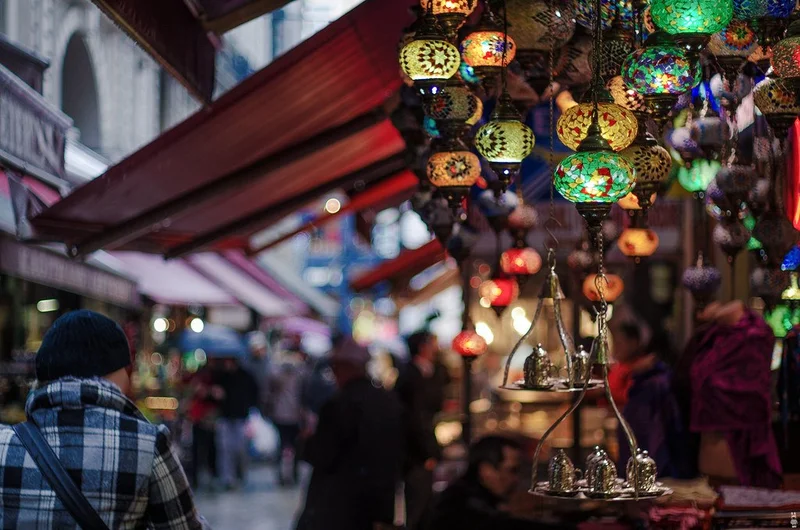
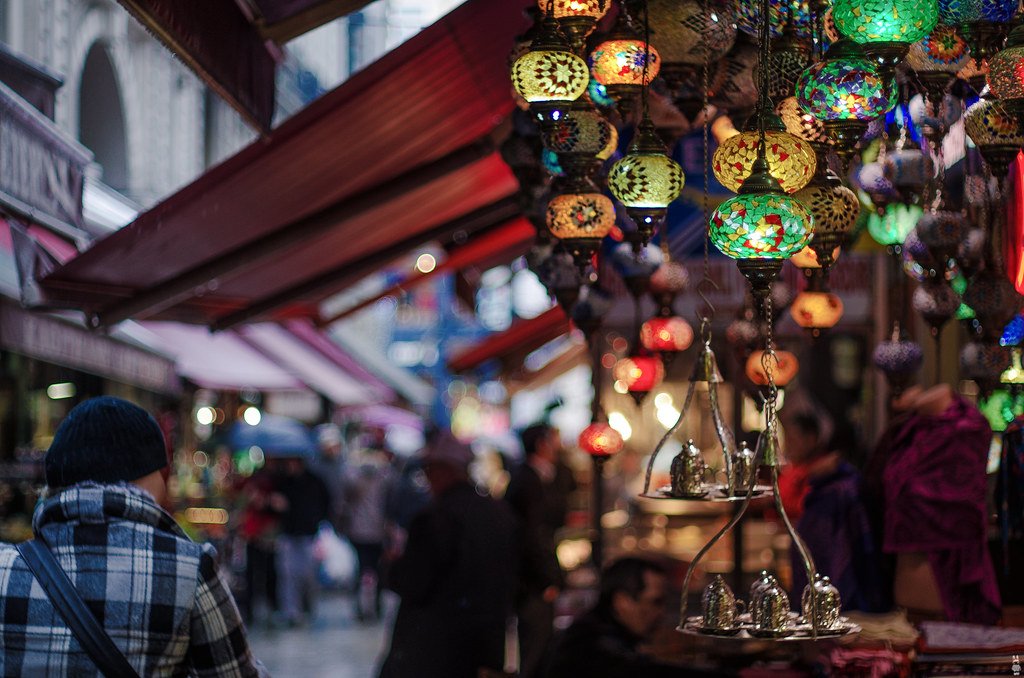
Lamps are the item with the biggest gap between the first quote and the final price. If a shopkeeper opens at 80 euros for a one-globe table lamp, that is where the work starts.
Lamps, ceramics and textiles: what to pay and what to check
Mosaic lamps are worth buying only if the packing is solid. A real one has uneven glass thickness, visible grout lines and a noticeable weight, and a plastic imitation feels suspiciously light. Ask whether the bulb, cable and adapter are included, and expect to pay extra for packing if you check the lamp in. Cabin bags rarely protect glass.
Ceramics split into two price worlds. A hand-painted İznik-style plate shows slight brush variation from one flower to the next and costs 400 TL or more for a medium bowl. A decal-printed copy shows a crisp, identical edge and should cost no more than 80 to 150 TL. A shopkeeper who asks real-plate money for a decal plate is working from the tourist price list. Ask for a food-safe glaze statement if you will eat from it.
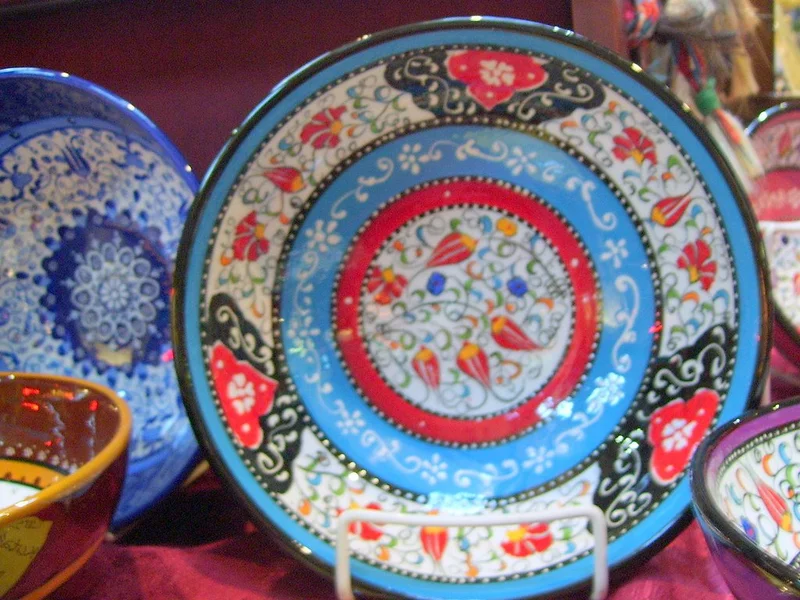
Tulip and rosette motifs on a white ground are the classic pattern.
Peshtemal towels are the best value in the textile lanes. A thin cotton towel costs 250 to 500 TL after a short talk, and Kadıköy shops across the Bosphorus run 20 to 30 percent below the Sultanahmet and Arasta level according to the spring guide. Check the label for 100 percent cotton or a cotton and linen mix.
Scarves are where "silk" claims go wrong. Viscose and blends cost about $10 to 30. A genuine silk scarf will not sell for that. Read the label and feel the fabric: real silk is warmer in the hand than shiny viscose.
Carpets and kilims: prices per piece and per square metre
Carpets are the one purchase worth planning before you leave the hotel. According to My Turkey Adventure (updated October 2026), a small simple kilim of about 60 by 90 cm runs $100 to 300, a medium kilim of about 120 by 180 cm runs $300 to 800, and a large hand-knotted carpet starts around $800 and goes past $3,000. The lostin.istanbul spring 2026 guide gives about 15,900 to 132,000 TL for a hand-knotted piece of 1 by 1.5 metres. That is 1.5 square metres, so the same range works out at roughly 10,600 to 88,000 TL per square metre, about €190 to €1,575 (our arithmetic).
The price range is that wide because the price follows the knot count, the wool or silk, the dye and the age. A fair first step is to turn the rug over. In a hand-knotted piece you can see each knot on the back, a machine-made or printed rug shows a uniform mesh, and real fringe is part of the warp and is never sewn on.
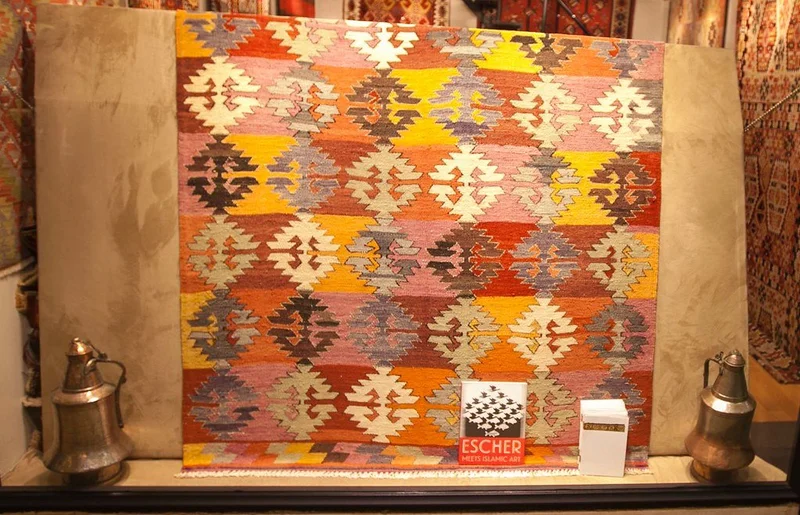
A kilim is flat-woven with no pile, so it folds into a suitcase. A pile carpet usually has to be shipped.
The tea and the demonstration are a sales process. If you are not buying, say so once and leave. If you are, ask for the knot density, the fibre, the dye and the age in writing on the invoice.
The Arasta Bazaar behind the Blue Mosque has fewer shops and calmer sellers, and prices there are closer to fixed. Our guide to fair prices for shopping in Istanbul compares more markets, and the souvenir price guide goes into lokum, baklava and coffee in more detail than this post does.
Gold, silver and jewellery: how Kapalıçarşı pricing works
The jewellers' street Kalpakçılar Caddesi is the part of the bazaar that works differently from every other lane. Gold is not haggled over as a whole. It is priced as weight multiplied by the day's gram price, plus workmanship (işçilik). The first part is public and moves during the day with the dollar and the ounce price. The second part is where the shop makes its margin.
Here is how to read a quote. The free-market gram price of gold at 10:00 on 4 November 2026 was about 6,458 TL buy and 6,459 TL sell (Bloomberg HT). A 22-carat bracelet is 91.6 percent gold, so ten grams carry about 59,000 TL of gold at that rate (10 x 6,458 x 0.916), before workmanship. Shops usually quote from their own gram price, a little above the market screen. Check the live gram price on the day you shop, because the figure above will be out of date by the time you read this.
Three habits protect you. Ask the shop to weigh the piece in front of you on a scale you can see. Ask for the gold price per gram and the workmanship as two separate lines on the invoice. And remember that investment bars and coins carry little or no workmanship charge, while a decorated bracelet carries a lot, and the workmanship is the part you can negotiate. Compare at least two shops before buying.
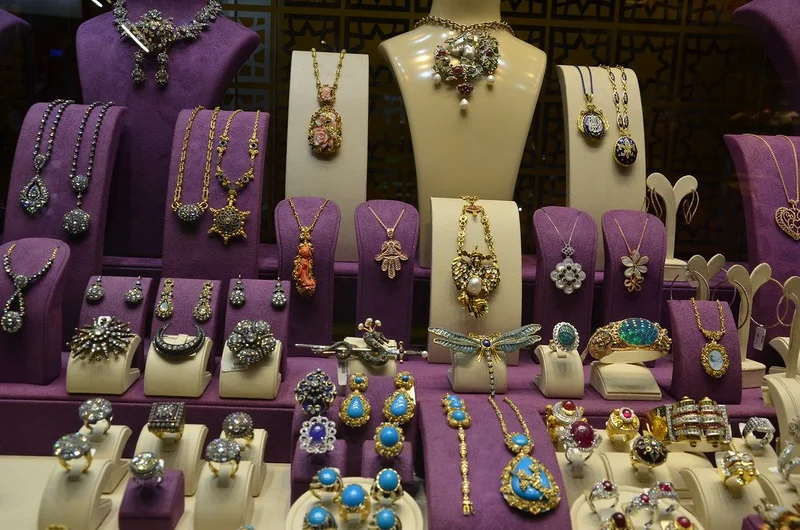
Silver is cheaper and easier. Sterling silver carries a .925 stamp, and the price should come from the weight plus a modest workmanship charge. We could not find a dated per-gram silver price in a reliable source, so check an online spot price in lira before you walk in.
Spices, saffron and Turkish delight: per kilo and per gram
The Spice Bazaar in Eminönü is the better place for food. Our own Spice Bazaar guide with hours and fair prices covers the lanes. In the main hall, Turkish delight costs 500 to 1,150 TL for 500 g, and good confectioners do not bargain. Ask to taste. Neon-green pistachio is a warning sign, and so is a box that has sat on a tourist shelf for a year.
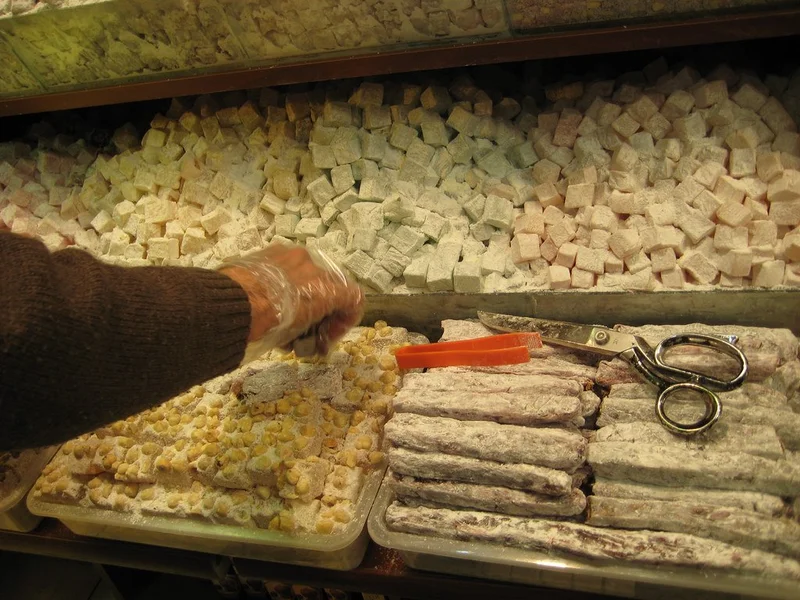
Rolled and cut lokum is sold by weight, so you can mix flavours and see what you are paying for before the shop packs the box.
Saffron is the classic fake. Real saffron costs about 140 to 210 TL a gram in the Spice Bazaar in the spring 2026 guide, which is roughly 14,000 to 21,000 TL per 100 g. Anything quoted at 20 to 80 TL a gram is almost always dyed safflower or corn silk, and large bags at suspiciously low prices, which istanbul.com also warns against, are probably not saffron. Real threads are red-orange with yellow tips and colour warm water slowly, over 10 to 15 minutes. Dye that runs out in seconds is a fake. Buy a small sealed jar, not a bag.
For tea and coffee, skip the bazaar. A 500 g pack of Çaykur tea costs about 160 to 195 TL in a supermarket, and Kurukahveci Mehmet Efendi coffee is about 350 to 400 TL for 250 g.
Evil eyes, copper, backgammon and other small things
The evil-eye bead (nazar boncuğu) is the cheapest souvenir and the most copied. A hand-blown glass bracelet runs 50 to 150 TL, and anything under about 30 TL is mass-produced resin. Hold the bead to the light: handmade glass has tiny bubbles and slight asymmetry, and the eye is layered inside the glass, not painted on the surface.
Copper coffee pots (cezve) cost about 400 to 1,800 TL. Look for weight, visible hammer marks and a tin lining. Pure untinned copper can leach into coffee when heated, and aluminium copies weigh almost nothing.
Backgammon boards, tea-glass sets, fridge magnets and slippers are the items where we could not find a dated price in 2025 or 2026 sources, so they are not in the table. For a board, ask for the wood and the inlay type, because a veneered board is priced very differently from a solid one. For magnets and slippers, wait until you have seen three shops.
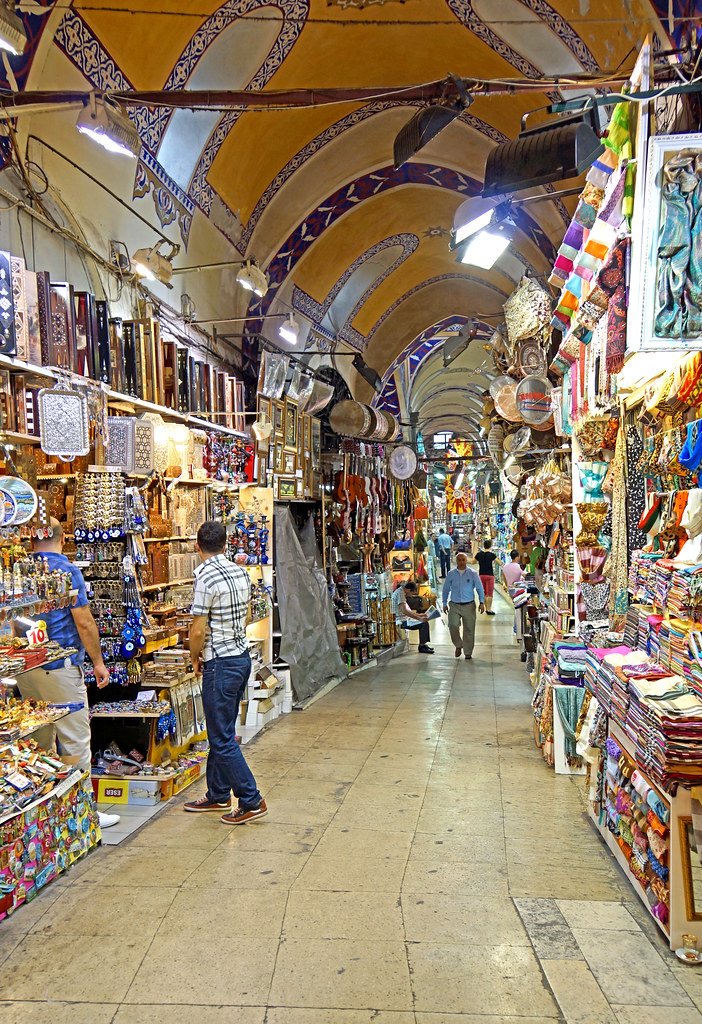
Walking one loop before you buy is the cheapest way to learn the going price.
How to bargain in the Grand Bazaar, step by step
Bargaining is expected at lamp, carpet, ceramic and jewellery shops. It is not expected at supermarkets, confectioners or fixed-price boutiques.
- Look first, ask second. Walk one full loop and note the prices at three shops for the same item. Do not buy at the first shop that invites you in.
- Open at 40 to 50 percent. My Turkey Adventure gives the example of a $200 quote answered with $80 to 100. Counter below 40 percent and you will be shown the door.
- Say the last price phrase. "Son fiyat ne?" means "what is the final price?" and "Biraz indirim yapar mısınız?" means "can you reduce it a little?" Close with "Düşüneceğim" ("I will think about it").
- Walk away. It is the strongest move, and sellers often call you back with a lower number. If they do not, you lost nothing, because the next shop sells the same lamp.
- Bundle. Buying three items at one shop gives you room to ask for a package price.
- Settle on one number, then pay. Do not reopen the price after you agree.
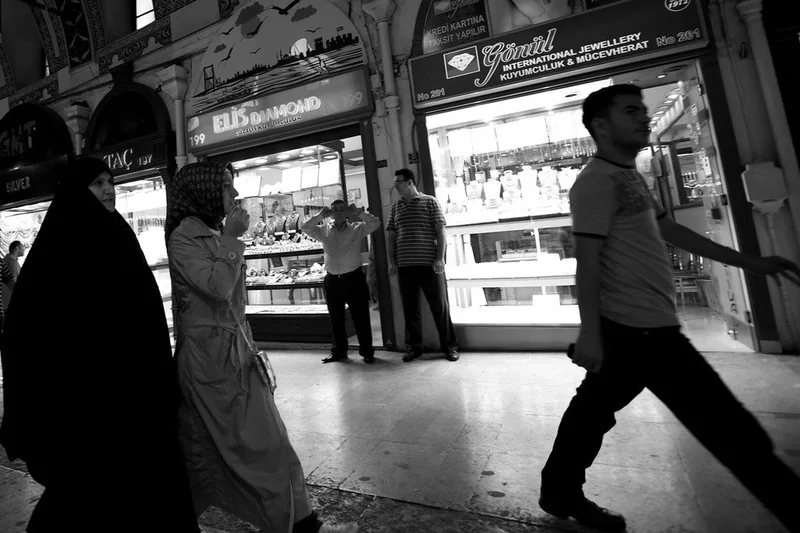
Cash, card or euros? Small purchases are cheaper in lira cash, because many shops add 3 to 5 percent on cards. Quote and pay in Turkish lira, and decline any card terminal that offers to charge you in your home currency, because that conversion rate favours the shop. For a carpet or gold, a card gives you added protection if something goes wrong. Airport exchange desks can take a margin of 10 to 15 percent, according to My Turkey Adventure, so read our guide on how to exchange money in Istanbul before landing.
Commission shops, touts and guides: who is working for whom
The most expensive problem in the bazaar is the person who is not a seller. A friendly "my brother has a shop" invitation leads to a commission shop, and the commission, which can be a large share of the price, is added to yours. Guides and drivers who bring tourists to a carpet or leather showroom are often paid the same way. Our guides do not push shops and take no commission from them, and on our Grand Bazaar tour they will walk past a shop where the price is high. More on this pattern is in our guide to Istanbul scams and how to avoid them.
How to spot fakes before you pay
Check brand watches and bags first: the price tells you it is a copy, and customs at home can seize it. Check silver for a .925 stamp. Check ceramics for brush variation. Check leather for the smell and the seams, because a label or a promise from the seller proves nothing. Check saffron with warm water. Check lamps for glued parts, and check "antiques" with extra suspicion. Ottoman coins, icons and tiles in the bazaar are nearly always modern copies, and exporting genuine antiquities needs permission under Turkey's Law No. 2863. Sources disagree on the age limit, and none we found was an official Turkish government page, so if a seller cannot give a written certificate, walk away.
Our Istanbul shopping tour adds malls and designer streets with a private driver if the bazaar is only part of your list.
Tax-free shopping, customs limits and sending a carpet home
Foreign visitors can reclaim VAT on purchases from participating shops. Our guide to tax-free shopping in Turkey and the airport refund explains the form, the stamp and the minimum purchase, which sources quote differently, so ask the shop which threshold applies before you buy a carpet.
Customs limits at home are set by your own country, not by Turkey. We checked the figures below on 11 November 2026 against CBP.gov and GOV.UK pages and EU customs sources, and they can change, so confirm them on the official site before you fly.
| Where you land | Duty-free allowance for goods bought abroad | Official page to check |
|---|---|---|
| United States | $800 per returning resident, renewable every 31 days; you must have been abroad at least 48 hours | CBP.gov, "Customs duty information" |
| United Kingdom | £390 per person (£270 if you arrive by private plane or boat); over the limit, duty is charged on the full value | GOV.UK, "Bringing goods into the UK for personal use" |
| EU countries | €430 by air or sea, €300 by land (some states apply the lower limit to other arrivals) | your national customs authority |
Food, alcohol and fragile items have their own rules. Carry lamps in checked bags with bubble wrap, and keep every invoice. For carpets, ask the shop to arrange shipping only if it gives you a tracking number and an insured value in writing. The spring 2026 guide quotes DHL or UPS prices of about 2,100 to 7,900 TL to Europe and 6,300 to 15,900 TL to North America for a rug. Old carpets and rare textiles may need an export certificate, so ask before you pay for a piece that looks old.
Take the guesswork out of the Grand Bazaar
A shopping day is easier if the route is planned. Our Istanbul tours page lists the walking and driving options, and the three below cover most shopping days. The private Grand Bazaar and Spice Market shopping tour is from $90 per person for about six hours. The Topkapi, Hagia Irene and Grand Bazaar afternoon tour is from $150 per person and includes the Grand Bazaar. The Classic Istanbul full-day private tour is from $200 per person if you want the Old City first and the shopping after lunch. If you are travelling as a family of up to six, the private Mercedes Vito city tour with driver is $299 per group for eight hours. If you are arriving that day, our airport to Eminönü transfer page shows how to reach the Spice Bazaar side directly.

Send us a message on WhatsApp with your dates and we will tell you which day suits the bazaar.
Frequently Asked Questions
How much do things cost in the Grand Bazaar?
A small mosaic lamp costs about 800 to 1,500 TL after bargaining, a hand-painted ceramic bowl 400 to 1,200 TL, a peshtemal towel 250 to 500 TL and an evil-eye bracelet 50 to 150 TL. Carpets start around $100 for a small kilim and rise past $3,000. All figures are 2026 snapshots and move with the lira.
What should I buy in the Grand Bazaar?
Buy peshtemal towels, hand-painted ceramics, evil-eye beads, small mosaic lamps, copper cezve pots and Turkish delight, because the quality is easy to check and the prices are reasonable after bargaining. Add a small kilim if you want something that lasts. Skip designer-brand watches and bags, which are copies.
How much should I offer in the Grand Bazaar?
Offer 40 to 50 percent of the first price and expect to settle at about 60 to 70 percent. A $200 quote, for example, suggests an opening offer of $80 to $100. Going below 40 percent is considered disrespectful and often ends the conversation, so be ready to walk away politely.
Is the Grand Bazaar cheaper than the Spice Bazaar?
Neither is the cheapest place in Istanbul, and the Grand Bazaar carries the highest tourist markup. The back lanes behind the Spice Bazaar, such as Hasırcılar Caddesi, are quoted 30 to 50 percent lower, and Kadıköy is cheapest for towels and daily goods. For food, buy at the Spice Bazaar or in a supermarket.
How do I know if saffron is real?
Real saffron has red-orange threads with yellow tips and colours warm water slowly, over 10 to 15 minutes. Fake saffron is usually dyed safflower or corn silk and colours the water at once. At the Spice Bazaar, real saffron costs about 140 to 210 TL per gram, so a price of 20 to 80 TL a gram is a warning.
Can I pay in euros or dollars in the Grand Bazaar?
Many shops accept euros or dollars, but cash in Turkish lira usually gets the best price, and card payments often add 3 to 5 percent. If a card terminal offers to bill you in your home currency, decline and pay in lira so your bank does the conversion at its own rate.
Is gold cheaper in the Grand Bazaar?
Gold in the Kapalıçarşı is priced as weight times the day's gram price plus workmanship, so the metal is not cheaper than elsewhere, but the workmanship charge can be negotiated and compared across shops. Ask for the weight and the workmanship as separate lines on the invoice, and check the live gram price on the day.
Is tax-free shopping available for carpets and gold?
Yes, foreign visitors can reclaim VAT at participating shops if they take the goods out of Turkey within three months and have the form stamped at customs. Ask the shop for the tax-free form at the till, and check the minimum purchase before you buy, because sources quote different thresholds.
Written by the Get Istanbul Tours team: licensed local guides and trip planners based in Istanbul.
Leave a Comment
Private tours in Istanbul
Grand Bazaar & Spice Market Private Shopping Tour, Best Value
Shop the Grand Bazaar and the Spice Market with a local guide who knows the trusted vendors and fair prices.
Topkapi (Ticket Included), Hagia Irene & Grand Bazaar Tour
A small-group Old City tour of Topkapi Palace (ticket included), the Hagia Irene Museum and the Grand Bazaar, with hotel pick-up.
Related articles
 Travel Tips
Where to Eat in Taksim 2027: Istiklal Street, Side Streets and What to Order, with Prices
Where to eat in Taksim: grill houses, meyhane streets, lokanta lunches and street food, with what to order and dinner costs of 1,200 to 3,000 TL.
Read More Itineraries
Istanbul 8 Day Itinerary 2027: Day by Day with Bosphorus, Islands, Bursa and Costs
Istanbul 8 day itinerary: Old City, Topkapi, Bosphorus, Princes' Islands and a Bursa day trip, with entrance fees and our 8-day private package from $1,499.
Read More Istanbul
Where to Eat in Beyoğlu 2027: Istiklal, Galata and Cihangir – Dishes, Prices, Streets
Where to eat in Beyoğlu by street and hour: Cihangir breakfast, Karaköy lunch and baklava, Nevizade meyhane dinner, with reported 2026 prices and a food tour from $90.
Read More