Travel TipsIstanbul7 November 202617 min read
What to Buy in Istanbul: 20 Souvenirs and Real Prices 2027
What to buy in Istanbul: 20 souvenirs with lira and euro prices, where to shop, how to bargain, fakes to avoid and tax-free rules. Tours from $90 per person.
In this article
- What to buy in Istanbul: 20 souvenirs and prices at a glance
- Food souvenirs: lokum, baklava, coffee, tea and spices
- Things for the home: rugs, ceramics, lamps, towels and soap
- Rugs and kilims: what the price means
- Small gifts: nazar beads, scarves, leather and design shops
- Where to buy: Grand Bazaar, Spice Bazaar, Arasta, Kadıköy
- How to bargain, and what a fair price looks like
- Fakes and traps to avoid
- Tax-free shopping and what customs allow
- Getting it home on a plane
- Shopping with a guide
- Frequently Asked Questions
What to buy in Istanbul comes down to food that survives a flight (lokum, baklava, coffee, tea, spices) and a few crafts that are cheaper here than at home (peshtemal towels, hand-painted ceramics, mosaic lamps, a small kilim). A sensible souvenir budget is €40 to €120 per person for food and small gifts, and rugs are a separate decision. The table below gives lira prices from a spring 2026 price guide, converted at about 56 TL per euro.
If you would rather shop with someone who knows which stalls sell honestly, our private Grand Bazaar and Spice Market shopping tour costs from $90 per person and runs about six hours. There is no deposit: you pay on the tour. For the edible souvenirs, the Istanbul street food tour is $90 per person for six hours and includes the baklava and lokum shops locals use.
What to buy in Istanbul: 20 souvenirs and prices at a glance
The lira has lost value steadily, so every price in this guide is a snapshot. The lira ranges come from lostin.istanbul (last updated April 2026), the baklava range from Yemek.com (22 September 2026), and the dollar figures from My Turkey Adventure (updated 15 October 2026). Euro values use 56.04 TL per euro (ECB, 2 November 2026). Expect shop prices in November 2026 to sit at the upper end of the spring ranges, and prices fixed for 2027 will not be known until the new year.
| # | Souvenir | Typical price (TL) | About in euros | Where |
|---|---|---|---|---|
| 1 | Turkish delight (lokum), 500 g | 500 to 1,150 | 9 to 21 | Hacı Bekir, Hafız Mustafa |
| 2 | Baklava, 1 kg | 1,800 to 2,600 | 32 to 46 | Karaköy Güllüoğlu, Hafız Mustafa |
| 3 | Turkish coffee, 250 g | 350 to 400 | 6 to 7 | Kurukahveci Mehmet Efendi, Migros |
| 4 | Copper coffee pot (cezve) | 400 to 1,800 | 7 to 32 | Grand Bazaar copper lane |
| 5 | Turkish tea, 500 g | 160 to 195 | about 3 | Supermarkets (Çaykur) |
| 6 | Saffron, 1 g | 140 to 210 | 2.50 to 3.75 | Spice Bazaar |
| 7 | Olive oil soap, 150 g bar | 60 to 200 | 1 to 4 | Spice Bazaar, Eyüp |
| 8 | Evil eye (nazar) bracelet | 50 to 150 | 1 to 3 | Grand Bazaar |
| 9 | Peshtemal towel | 250 to 700 | 4.50 to 12.50 | Arasta Bazaar, Kadıköy |
| 10 | Hand-knotted rug, 1 x 1.5 m | 15,873 to 132,275 | 283 to 2,360 | Arasta, Sultanahmet |
| 11 | Cushion cover | 150 to 400 | 3 to 7 | Grand Bazaar, Sultanahmet |
| 12 | Mosaic lamp, small | 800 to 1,500 | 14 to 27 | Grand Bazaar lamp lane |
| 13 | Hand-painted İznik-style plate | 400 to 3,500 | 7 to 62 | Arasta, Sultanahmet |
| 14 | Silk-feel scarf (viscose or blend) | about $10 to $30 | about 9 to 28 | Grand Bazaar, Kadıköy |
| 15 | Small leather wallet | about $25 to $70 | about 23 to 65 | Grand Bazaar |
| 16 | Backgammon (tavla) set | no reliable price found | ask in the shop | Grand Bazaar |
| 17 | Dried apricots, figs, pistachios | priced per kilo | ask for the weight price | Spice Bazaar |
| 18 | Pomegranate syrup, halva | priced per jar | ask for the jar price | Spice Bazaar, supermarkets |
| 19 | Rakı or olive oil | priced per bottle | ask, then check airline rules | Supermarkets, duty free |
| 20 | Cat prints and design-shop gifts | priced per item | fixed prices | Galata, Istanbul Modern shop |
Items 16 to 20 have no price we could verify with a date, so we left them open instead of guessing. A rug sits in a different league from the rest: the same spring guide puts a hand-knotted piece of 1 by 1.5 metres between about 15,900 and 132,000 TL, which is why it gets its own section below.
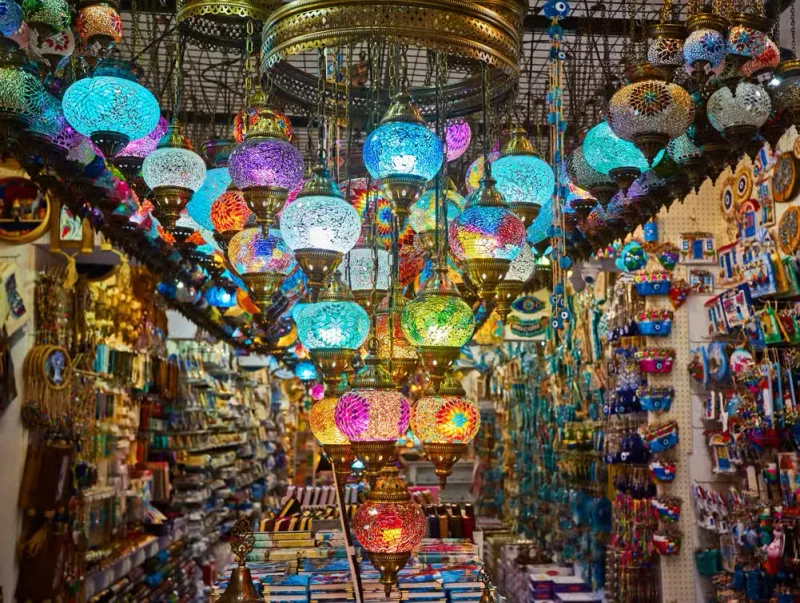
The Grand Bazaar lamp lane is the quickest way to see what a small mosaic lamp costs at the first quote and what it costs after ten minutes of talking.
Food souvenirs: lokum, baklava, coffee, tea and spices
Turkish delight is the safest first purchase because nobody leaves it at home. Ali Muhiddin Hacı Bekir on Hamidiye Caddesi in Eminönü is the original shop, and Hafız Mustafa is the glossier chain with boxes made for suitcases. Prices for 500 g run from about 500 TL for plain and fruit pieces to about 1,150 TL for double-roasted pistachio and pomegranate rolls. Good lokum is soft and cuts cleanly. Neon green pistachio is a warning sign, and so is a box that has been sitting on a tourist shelf for a year. Ask for a taste before you pay. Confectioners do not bargain.
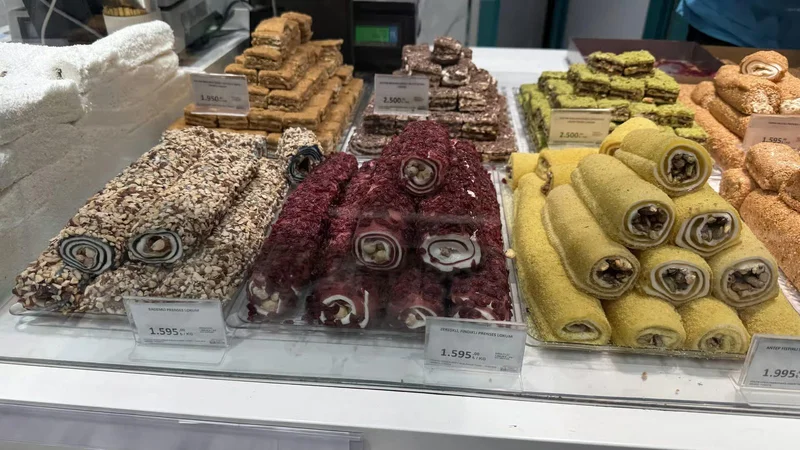
Rolled and cut lokum is sold by weight, so you can mix flavours in one box and see exactly what you are paying for before the shop packs it.
Baklava is the heavier gift. In autumn 2026 a kilo of pistachio baklava costs about 1,800 to 2,600 TL, roughly €32 to €46, and walnut baklava about 1,400 to 1,900 TL. Our separate guide to the best baklava shops in Istanbul and their kilo prices lists nine addresses and explains why dry (kuru) baklava travels better than the syrupy kind.
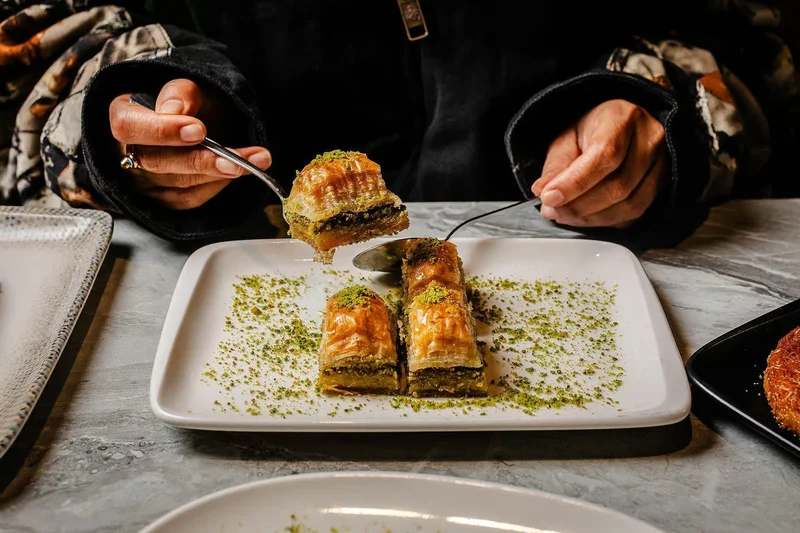
A plate of pistachio baklava in a shop is the cheapest test of quality: a good piece shatters when you bite it and leaves little oil on the plate.
Turkish coffee from Kurukahveci Mehmet Efendi in Eminönü (roasting since 1871) costs about 350 to 400 TL for 250 g, and Migros sells the same brand slightly cheaper. Check that the seal is intact and that a roast date is printed on the pack. The guide we used warns that airport shops can charge 40 to 100 percent above city prices for coffee, saffron and lamps, so buy in the city and not at the gate. Tea is the opposite story: a 500 g pack of Çaykur costs about 160 to 195 TL in a supermarket, and loose leaf is better than teabags.
A set of six tulip glasses with saucers, a packet of tea and a small cezve makes a complete Turkish breakfast kit that fits in a carry-on if you wrap the glass in clothes.
Spices and saffron belong in the Spice Bazaar. Real saffron costs about 140 to 210 TL per gram there; anything quoted at 20 to 80 TL a gram is almost always dyed safflower or corn silk. Real threads are red-orange with yellow tips and colour warm water slowly, over 10 to 15 minutes. For pul biber, sumac and Urfa chilli, ask for spices vacuum-sealed from the bin and skip the pre-mixed "tourist" packs. Our guide to the Spice Bazaar, with opening hours and fair prices shows which lanes behind the main hall are cheaper.
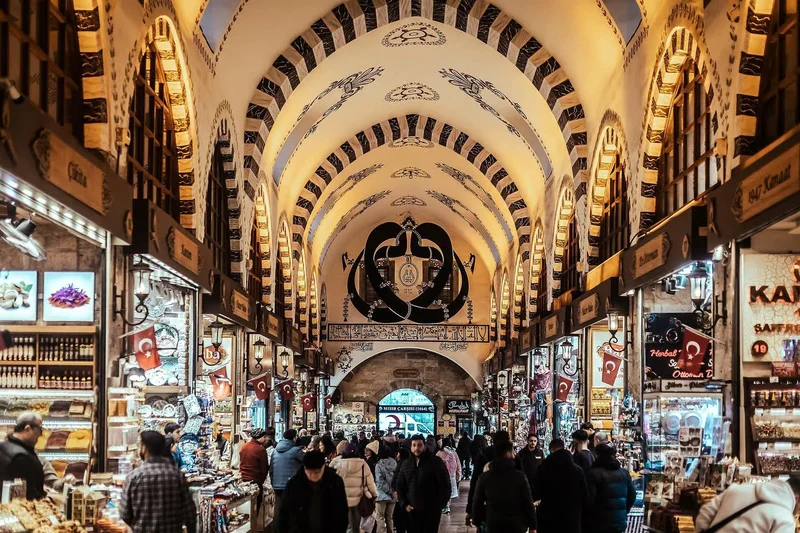
The main hall of the Spice Bazaar is the tourist price level. A few minutes' walk behind it, on Hasırcılar Caddesi, the same goods are quoted 30 to 50 percent lower according to lostin.istanbul.
Things for the home: rugs, ceramics, lamps, towels and soap
Peshtemal towels are the best value in this section. A thin, quick-drying Turkish cotton towel costs about 250 to 700 TL, and shops in Kadıköy are described as 20 to 30 percent cheaper than Arasta Bazaar. Look for a 100 percent cotton or cotton and linen label and a weight around 300 to 400 g. Fixed prices are normal, so do not push.
Hand-painted ceramics need a close look. An İznik-style plate painted by hand costs about 400 to 3,500 TL, while decal-printed copies cost 80 to 150 TL. Hand-painted pieces show slight brush variation, and decals show a crisp, regular edge. Check that the glaze is food-safe before you eat from it.
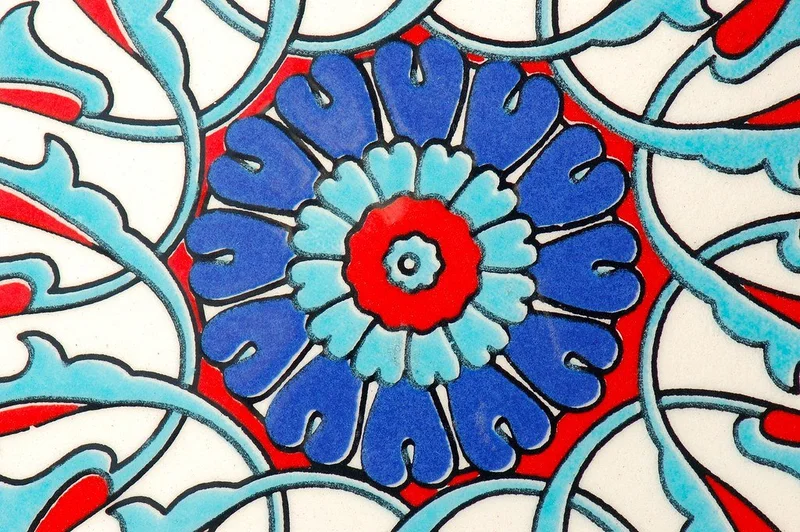
Rosette and tulip patterns on white are the classic İznik look, and a hand-painted plate shows small differences from one flower to the next.
Mosaic lamps cost about 800 to 1,500 TL for a small table lamp and up to 4,000 TL for a ceiling cluster. Real ones have uneven glass thickness, visible grout lines and noticeable weight; a plastic imitation feels suspiciously light. Shops pack for checked luggage, and a lamp in a cabin bag rarely survives. Check the plug and voltage as well, because the lamp may need an adapter at home.
Olive oil soap is the cheap, light gift: about 60 to 200 TL per 150 g bar. The ingredient list should read olive oil, sodium hydroxide and water, and a maker's stamp on the bar is a good sign. Glitter soaps are novelty items.
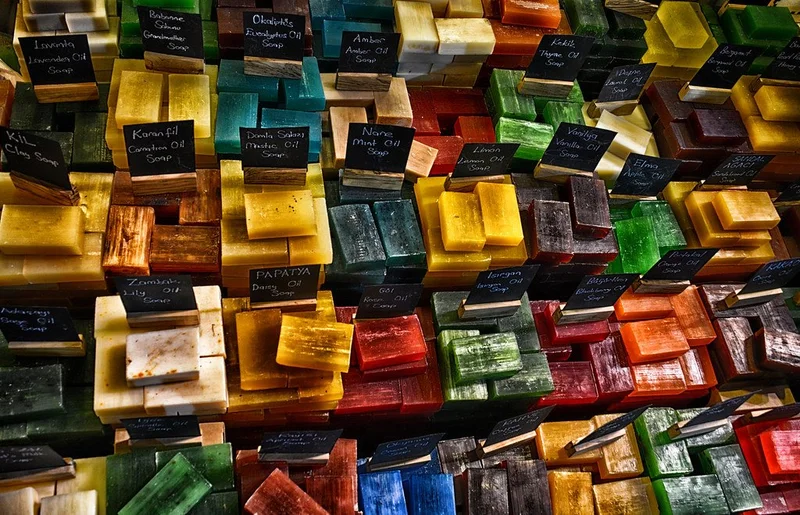
Soap stalls sell by the bar, so you can mix scents. Pick up a bar and smell it; a strong perfume usually hides a weak base.
Cezve and copperware come from the copper lane near the Grand Bazaar. A hand-hammered cezve costs about 400 to 1,800 TL. It should have weight, visible hammer marks, and a tin lining (kalaylı); aluminium copies weigh almost nothing. Pure untinned copper can leach into coffee when heated.
Rugs and kilims: what the price means
A rug is the one purchase worth planning. The spring 2026 lostin.istanbul guide gives about 15,900 to 132,000 TL for a hand-knotted 1 by 1.5 metre piece, which is roughly €280 to €2,360. My Turkey Adventure gives dollar ranges for 2026: a small simple kilim of 60 by 90 cm at $100 to $300, a medium kilim of 120 by 180 cm at $300 to $800, and a large hand-knotted carpet from $800 to over $3,000. Kilims are flat-woven and much easier to carry than a pile carpet.
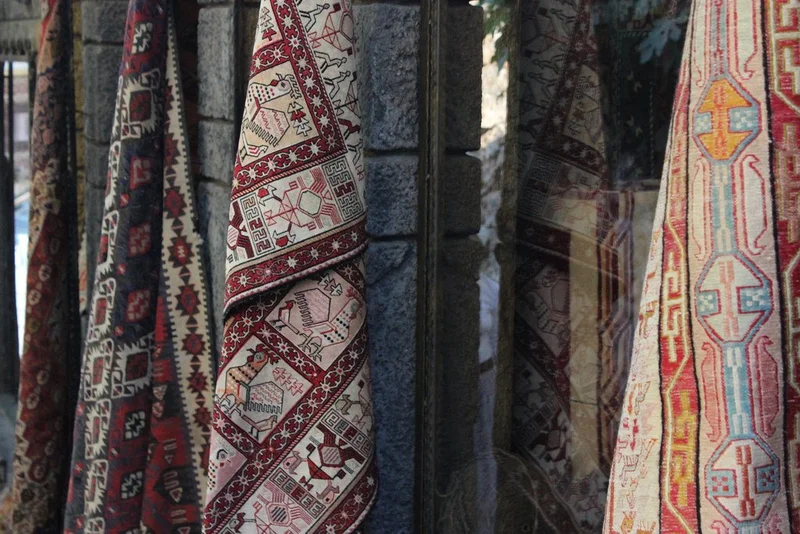
Turn a rug over before you talk price. In a hand-knotted rug you can see every knot on the back, while a machine-made or printed one shows a uniform mesh. Real fringe is part of the warp and is not sewn on. A rug labelled silk at a few hundred euros is almost always mercerised cotton or art silk.
Arasta Bazaar behind the Blue Mosque has fewer shops, calmer sellers and mostly fixed prices. Sultanahmet rug shops negotiate, and the carpet demonstration with tea is a sales process, not a courtesy. If you are not buying, say so once and leave politely. For shipping, DHL or UPS quotes in the spring guide ran from about 2,100 to 7,900 TL to Europe and 6,300 to 15,900 TL to North America. Get a tracking number before you pay.
Small gifts: nazar beads, scarves, leather and design shops
The evil eye bead (nazar boncuğu) is the cheapest souvenir and the most faked. A simple hand-blown glass bracelet in the Grand Bazaar is about 50 to 150 TL, and silver or designer versions run 200 to 500 TL. Anything under 30 TL is mass-produced resin. Hold the bead to the light: hand-blown glass has tiny bubbles and slight asymmetry, and the eye is layered inside, not painted on the surface.
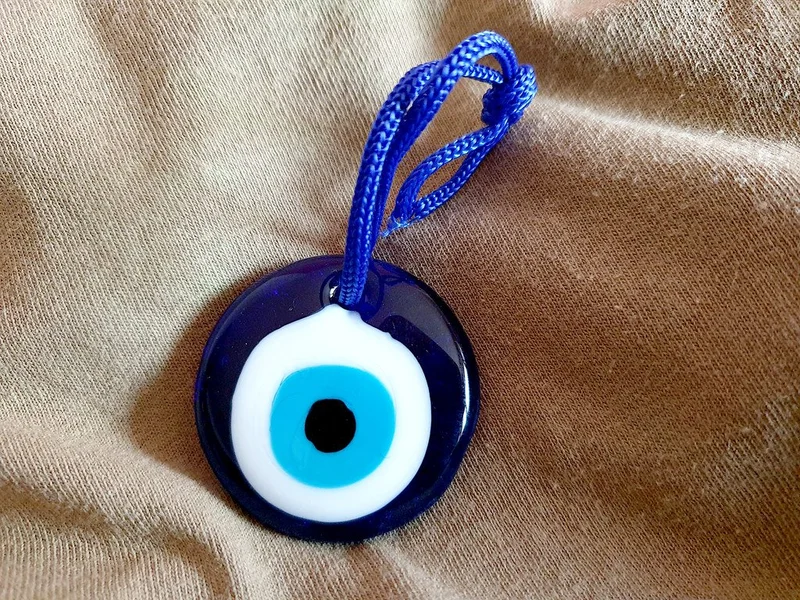
Locals hang a nazar above a door or a baby's cot. As a gift it works because it costs little and the meaning is known in many countries.
Scarves in viscose or blends run about $10 to $30, and a "100 percent silk" pashmina at a very low price is almost certainly not silk. Feel the fabric. Women need a scarf for active mosques, so one bought early is useful on the same trip. Leather wallets cost about $25 to $70, but fake brand-name leather and watches are common on Kalpakçılar Caddesi, and customs at home can confiscate them.
For fixed prices and design, go to Karaköy and Galata, where nothing is bargained. The ground-floor shop of Istanbul Modern sells porcelain coffee sets and scarves by contemporary artists, and cat-themed prints by local illustrators are a safer gift than a mass-produced magnet. Our guide to Galata and Karaköy covers the streets worth walking.
Where to buy: Grand Bazaar, Spice Bazaar, Arasta, Kadıköy
The same product can cost very different amounts depending on where you stand. This is the pattern in the guides we cross-checked.
| Market | Price level | Bargaining | Good for |
|---|---|---|---|
| Grand Bazaar | Highest tourist markup | Essential, aim for 40 to 50 percent off the first quote | Lamps, nazar, copper, rugs |
| Spice Bazaar (main hall) | Moderate | Light | Lokum, tea, saffron |
| Spice Bazaar back lanes | 30 to 50 percent cheaper | Light | Spices, dried fruit |
| Arasta Bazaar | Mid-range | Minimal, mostly fixed | Rugs, ceramics, peshtemal |
| Karaköy and Galata | Fair, fixed | None | Design, art, vintage |
| Kadıköy | Lowest | None | Peshtemal, daily goods |
| Airport shops | 40 to 100 percent markup | None | Last-minute only |
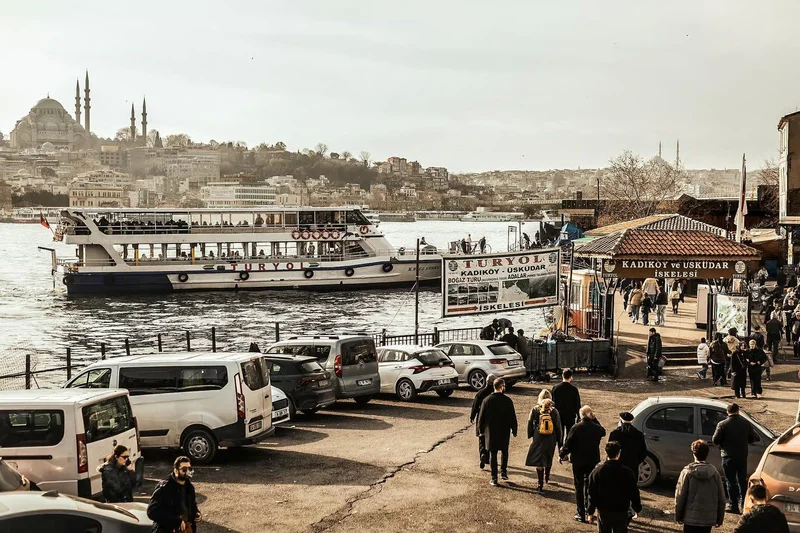
Eminönü is the one stop that covers both markets: the Spice Bazaar, Hacı Bekir and Mehmet Efendi are all within a short walk of the ferry pier.
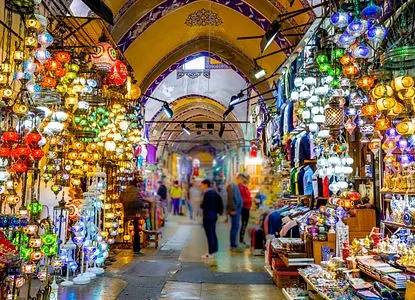
A short route that works: take the tram to Eminönü, do the Spice Bazaar and the shops on Hamidiye Caddesi in the morning, walk uphill to the Grand Bazaar for lamps and copper, and keep the Arasta Bazaar for the end of a Sultanahmet day. Our Grand Bazaar guide with opening hours and gates explains that the market is closed on Sundays, and our Istanbul shopping tour adds malls and designer streets with a private driver.
How to bargain, and what a fair price looks like
Bargaining is expected at bazaars, rug shops and jewellery stalls, and it is not expected at supermarkets, confectioners or fixed-price boutiques. The guides agree on the pattern: counter at roughly 40 to 50 percent of the first number, expect to settle around 60 to 70 percent, and treat anything below 40 percent as disrespectful. Walking away is the strongest move, and sellers often call you back.
Useful phrases are "Son fiyat ne?" (what is the final price?), "Biraz indirim yapar mısınız?" (can you reduce it a little?), "Düşüneceğim" (I will think about it) and "Nakit indirim?" (a cash discount?). Buying several items from one seller gives you room to ask for a package price.
Payment matters too. Many vendors add 3 to 5 percent for cards, cash often gets a better price, and you should refuse any offer to charge you in your home currency. Pay in lira and let your own bank convert. Airport exchange desks can take a margin of 10 to 15 percent according to My Turkey Adventure, so see our guide to exchanging money in Istanbul before you land.
Fakes and traps to avoid
Three traps account for most of the complaints. The first is the carpet shop tea: a friendly invitation that turns into long sales pressure. The second is the "my brother's shop" tout, who steers you to a shop that pays him commission, which raises your price. The third is fake silver and gold: genuine sterling carries a .925 stamp, and anything large should be valued by a jeweller outside the bazaar.
Fake antiques are the most expensive mistake. Ottoman "antique" coins, icons and tiles in the bazaar are almost always modern copies, and jewellery sold as Ottoman is usually plated brass. More important, exporting genuine antiquities without permission is illegal under Turkey's Law No. 2863 on the protection of cultural and natural property, and customs can treat old carpets, coins, icons and tiles as restricted. The sources we found disagree on the age limit (50 and 100 years are both quoted) and none was an official Turkish government page, so we cannot give you a certain number. If a seller cannot give you a written certificate, walk away. More tricks are collected in our guide to Istanbul scams and how to avoid them.
Tax-free shopping and what customs allow
Foreign visitors can reclaim VAT on purchases from shops that take part in tax-free shopping. The rules that agree across sources: buy from a participating shop, ask for the tax-free form at the till, take the goods out of Turkey within three months, and have the form stamped at customs on departure, where officers may ask to see the items, so keep them accessible in your bag. Refunds are usually paid net of a handling fee.
The minimum purchase is where sources conflict. Most list 1,000 TL per receipt, one 2026 legal guide says 2,000 TL from one retailer on the same day, and older pages quote 100 TL. We could not confirm the current figure on an official Turkish tax authority page, so ask the shop which threshold applies before you buy a rug. Food, alcohol and fragile items follow your home country's allowance, which is set by your own customs authority and not by Turkey. Check it before you pack raki or olive oil.
Getting it home on a plane
Vacuum-pack edibles and check the rules of any country you transit through. Dry (kuru) baklava in a sealed box keeps for days, and vacuum-sealed baklava lasts two to three weeks unrefrigerated according to the spring guide. Pack lokum flat in a hand bag. Wrap ceramics in clothes and put them in the centre of a suitcase, and ask the shop for bubble wrap on lamps and glass. Rakı and olive oil go in checked luggage, and liquids over the cabin limit cannot go in a carry-on.
Rugs can be folded into a suitcase if they are kilims, or shipped. Insure anything over about 26,000 TL (roughly €470) and keep the invoice. If the purchase is large and the plan is to buy several things, the Istanbul tours page shows tours that can be combined with a shopping morning, and our Turkey tour packages include hotel nights if you are building a longer trip.
Shopping with a guide
A guide earns the fee on three things: translation when a price is quoted in a language you do not read, a shortlist of shops that do not rely on commission, and a second opinion on authenticity. Our private Grand Bazaar and Spice Market shopping tour costs from $90 per person for about six hours with a licensed guide, and there is no deposit, you pay on the tour. Note that the Grand Bazaar itself is closed on Sundays. If you would rather taste than shop, the Istanbul street food tour is $90 per person for six hours and ends at the sweet shops that make the best gifts. Prices vary by season and group size, so send us a message for the current rate. For a wider look at the city, see things to do in Istanbul.
Frequently Asked Questions
What is the best thing to buy in Istanbul?
The best things to buy in Istanbul are Turkish delight, baklava, Turkish coffee, tea, spices, olive oil soap and a Turkish cotton peshtemal towel, because all of them are cheaper than abroad, easy to pack and authentic. Add a nazar bead or a small kilim for something that lasts.
What is Istanbul famous for buying?
Istanbul is famous for carpets and kilims, Turkish delight, baklava, ceramics from İznik, mosaic lamps, copperware, evil eye beads and spices from the Spice Bazaar. Most of them are sold in the Grand Bazaar and the Spice Bazaar, with fixed prices in Arasta Bazaar and Karaköy.
What to buy in Istanbul airport?
Buy only what you forgot: sealed Turkish delight, vacuum-packed baklava and packaged coffee. Airport prices can be 40 to 100 percent above city prices according to a 2026 souvenir guide, and we could not verify which of the brand shops sit inside the terminal, so check the shop directory of the airport before you rely on a brand.
Is Istanbul cheap for shopping?
Istanbul is cheap for food, towels, soap and ceramics, and expensive for rugs and anything sold at the first tourist quote. A kilo of pistachio baklava is about 1,800 to 2,600 TL, roughly €32 to €46 in autumn 2026, and bargaining brings bazaar prices down by 30 to 50 percent.
Can you bargain in Istanbul?
Yes, bargaining is normal in the Grand Bazaar, rug shops and jewellery stalls, where counter-offers at 40 to 50 percent of the first quote are usual. It is not done in supermarkets, confectioners, Arasta Bazaar (mostly fixed) or boutiques in Karaköy and Galata.
Is tax-free shopping available in Istanbul?
Yes, foreign visitors can claim a VAT refund from participating shops if they take the goods out of Turkey within three months and have the form stamped at customs. Sources list a 1,000 TL minimum per receipt, but we could not confirm the current figure officially, so ask the shop first.
Is the Grand Bazaar or the Spice Bazaar cheaper?
Neither is the cheapest option: both carry a tourist markup, with the Grand Bazaar the highest. Back lanes of the Spice Bazaar such as Hasırcılar Caddesi are quoted 30 to 50 percent lower, and Kadıköy is cheapest for towels and daily goods.
Written by the Get Istanbul Tours team: licensed local guides and trip planners based in Istanbul.
Leave a Comment
Private tours in Istanbul
Grand Bazaar & Spice Market Private Shopping Tour, Best Value
Shop the Grand Bazaar and the Spice Market with a local guide who knows the trusted vendors and fair prices.
Istanbul Street Food Tour with a Local Guide, 6 Hours
Taste Turkish street food, baklava, tea and coffee with a local guide on a walk through Istanbul's authentic neighbourhoods and markets.
Related articles
 Travel Tips
Where to Eat in Taksim 2027: Istiklal Street, Side Streets and What to Order, with Prices
Where to eat in Taksim: grill houses, meyhane streets, lokanta lunches and street food, with what to order and dinner costs of 1,200 to 3,000 TL.
Read More Itineraries
Istanbul 8 Day Itinerary 2027: Day by Day with Bosphorus, Islands, Bursa and Costs
Istanbul 8 day itinerary: Old City, Topkapi, Bosphorus, Princes' Islands and a Bursa day trip, with entrance fees and our 8-day private package from $1,499.
Read More Istanbul
Where to Eat in Beyoğlu 2027: Istiklal, Galata and Cihangir – Dishes, Prices, Streets
Where to eat in Beyoğlu by street and hour: Cihangir breakfast, Karaköy lunch and baklava, Nevizade meyhane dinner, with reported 2026 prices and a food tour from $90.
Read More