

 Muslim tour Istanbul
Islamic History Tour Istanbul 2027: Sahaba Tombs, Eyüp and Sacred Relics
One day covers Hagia Sophia, the Blue Mosque, Süleymaniye and Topkapı's Sacred Relics; a second adds Eyüp Sultan and the companions' tombs. Private guide from $199.
Browse our tours
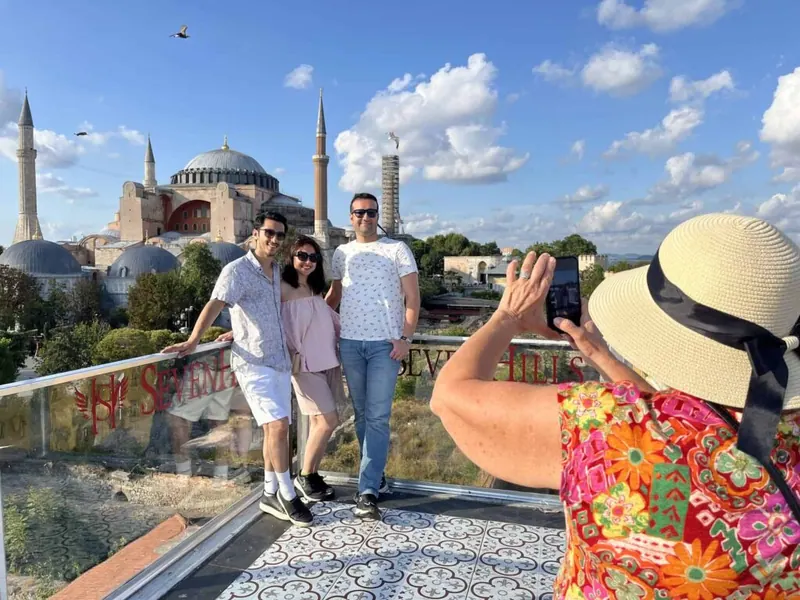
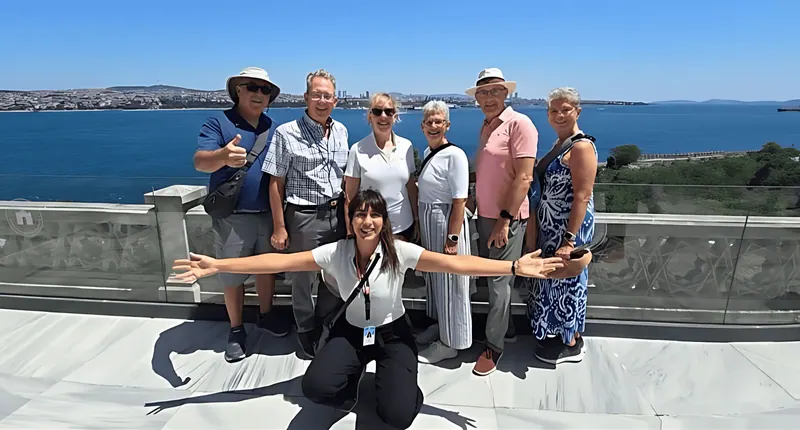
An Islamic history tour of Istanbul takes one full day for the core sites (Hagia Sophia, the Blue Mosque, Süleymaniye and the Sacred Relics at Topkapı Palace) and a second day for Eyüp Sultan, the tomb of Abu Ayyub al-Ansari and the companions' graves along the Golden Horn. With a licensed private guide, our private Istanbul tour costs from $199 per group per day, and you choose the order around the five prayers. Tickets are extra, and Topkapı is closed on Tuesdays.
We have run tours in Istanbul since 2010, and a large share of our guests are Muslim families from the UK, the Gulf, Malaysia, Indonesia, Pakistan and the United States. Most of them ask for the same thing: less Byzantine art history, more of the city's Islamic story, from the first Arab sieges in the seventh century to the Ottoman sultans who kept the Prophet's mantle here. This page sets out where those places are, which ones you can actually visit, and a route that fits around dhuhr and asr.
| Quick facts | |
|---|---|
| Time needed | 1 day for the Old City, 2 days to add Eyüp and the companions' tombs |
| Our price | Private guide from $199 per group per day; car with driver from $220 per group |
| Closed days | Topkapı Palace: Tuesdays; mosques close to visitors during each prayer |
| Paid entry | Hagia Sophia gallery route €25 for foreign visitors; Topkapı priced in euros |
| Free entry | Blue Mosque, Süleymaniye, Eyüp Sultan, Fatih Mosque |
| Dress | Long sleeves and trousers or a long skirt; headscarf for women in mosques |
| Guides | English as standard; Arabic-speaking guides confirmed per date in writing |
Which companions of the Prophet are buried in Istanbul?
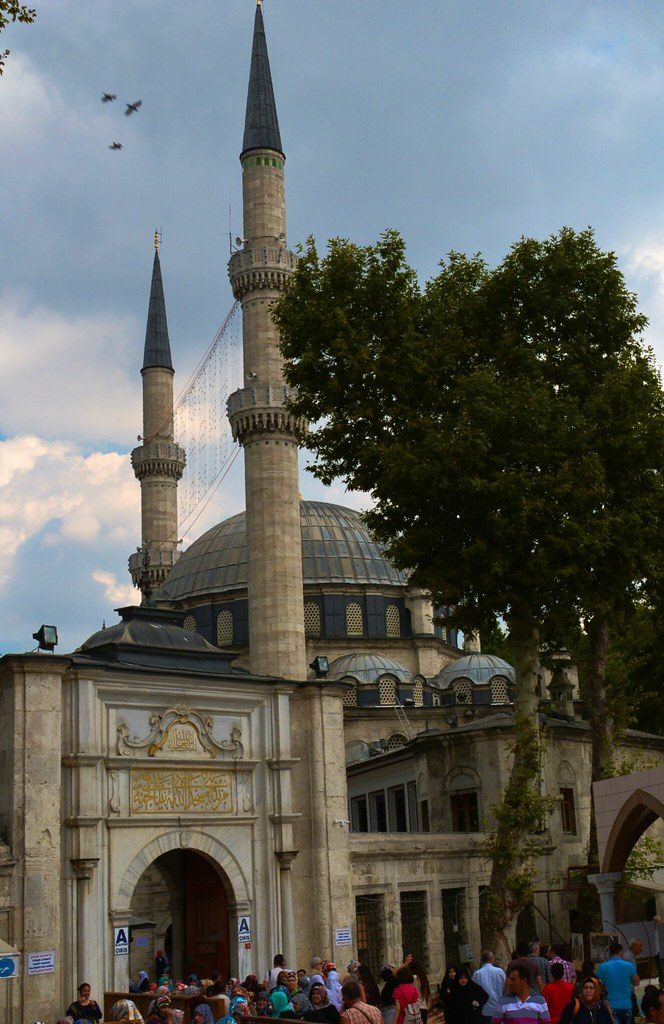
The best known is Abu Ayyub al-Ansari (Khalid ibn Zayd), the companion who hosted the Prophet in Medina after the Hijra. Historical sources agree that he joined an Umayyad campaign against Constantinople in his old age, died during it in the late 660s or 670s, and asked to be buried as close to the city walls as possible. After the Ottoman conquest in 1453, his grave was identified outside the walls, and Mehmed II built a tomb and a mosque beside it in 1458. The district is still called Eyüp after him.
Other graves along the Golden Horn carry the names of companions too. The most visited is the tomb of Abu Shayba al-Khudri at Ayvansaray, near the point where the land walls meet the water, with smaller graves of men remembered as al-Ansari nearby. In Karaköy, the low vaulted Yeraltı Camii (Underground Mosque) holds tombs that tradition links to Arab warriors of the early sieges. Some writers give a figure of more than a thousand companions buried in the city; local historians accept a much smaller number of identified graves, and some sites are honorary (maqam) rather than proven burials. Our guides tell you which is which.
That honesty matters for planning. Eyüp is the anchor of any muslim tour of Istanbul; Ayvansaray is a 10-minute drive away and takes about 30 minutes; Yeraltı Camii is a short stop on the way back to the centre. If you want only the documented history, Eyüp alone is enough.
Eyüp Sultan Mosque and the tomb of Abu Ayyub al-Ansari
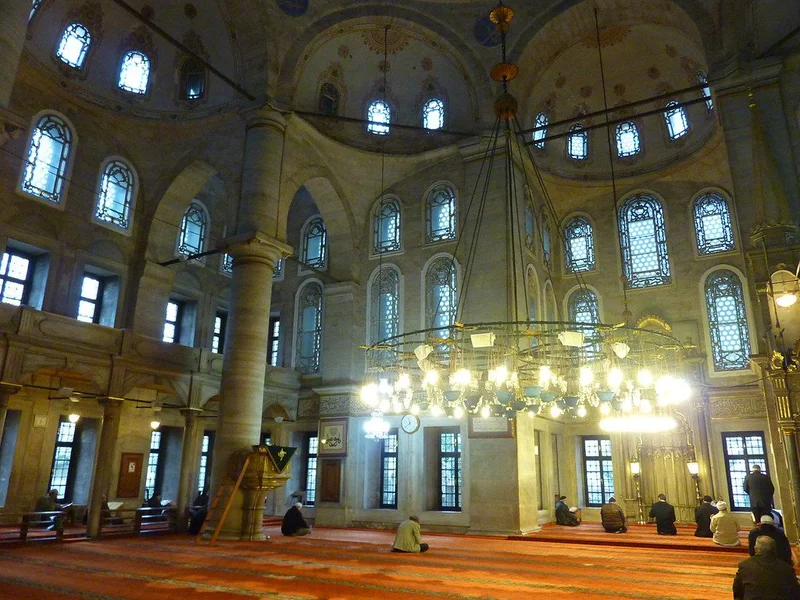
The mosque you see today was rebuilt under Selim III and finished in 1800, after earthquake damage to the 1458 original. The tomb sits across the inner courtyard, its walls covered in Iznik tiles, and there is usually a slow queue of visitors reading Al-Fatiha at the grille. For centuries, new Ottoman sultans were girded with a sword here as part of their accession, which shows how central the place was to the dynasty.
Entry is free. Fridays and weekends are very crowded, especially after jumu'ah, and during Ramadan the courtyard fills from asr until iftar. A weekday morning before 11:00 is calmest. Women pray in a separate section, and the tomb has its own entrance; headscarves are expected inside both.
Around the mosque spreads one of the oldest Muslim cemeteries in Istanbul, climbing the hill towards Pierre Loti. A cable car runs from the shore up to the café at the top, where many guests break for tea and a view over the Golden Horn. Getting there takes about 25 minutes by car from Sultanahmet, or you can take the Golden Horn ferry to Eyüp pier. Our guide, Pierre Loti Hill and the Eyüp cable car, covers the cable car from Eyüp, the café at the top and how to get there from the pier.
Topkapı Palace and the Sacred Relics (Hırka-i Saadet)
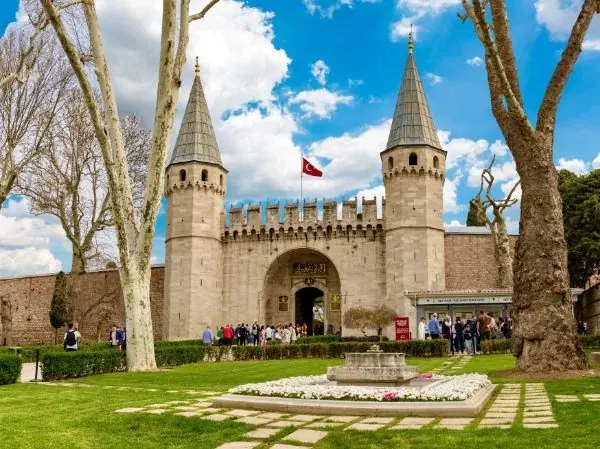
Private Istanbul tours, from $199 per group
For most Muslim visitors, the Sacred Trusts chamber in the third courtyard of Topkapı is the emotional centre of the trip. After Selim I took Egypt in 1517, the Ottoman sultans became guardians of relics associated with the Prophet and his companions. The Hırka-i Saadet (Blessed Mantle) is kept here, together with items such as a seal, hair from the beard, swords attributed to the early caliphs and companions, and keys and covers from the Kaaba. The Quran is recited in the rooms throughout opening hours.
Three practical points. Topkapı is closed on Tuesdays, so build your plan around that. The relic rooms get a long, slow line from late morning; arrive at opening and go to the third courtyard first, before the Harem or the Treasury. Photography is not allowed in the relic chamber, and staff ask visitors to keep their voices low. Tickets for foreign visitors are priced in euros and change often, so check muze.gov.tr in the week you travel.
Do not confuse this with the Hırka-i Şerif Mosque in Fatih, which keeps a different mantle of the Prophet. That one opens to visitors only during Ramadan: in 2026 it opened on the first Friday of the month, 20 February, and closed on the eve of Eid. If you travel in Ramadan 2027 (expected to begin around 8 February), ask us and we will fit it into your day.
Hagia Sophia, the Blue Mosque and Süleymaniye
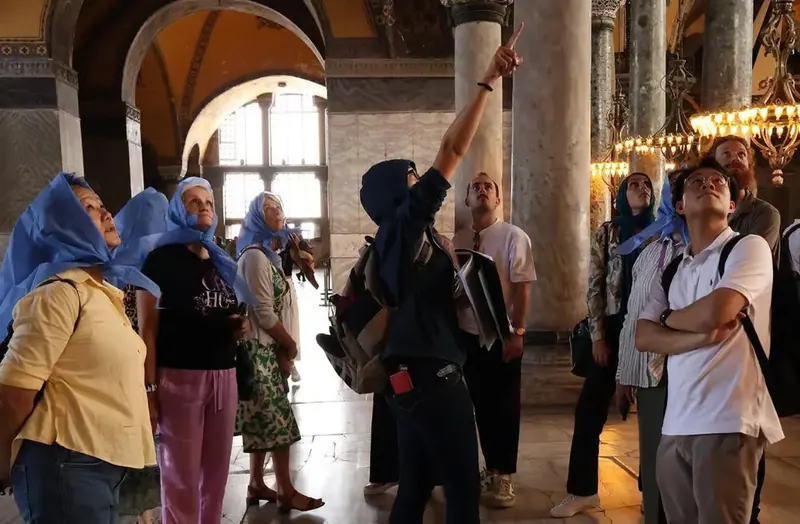
Classic Istanbul Full-Day Private Tour, from $200
Hagia Sophia was turned into a mosque by Mehmed II on the first Friday after the conquest in 1453, served as a museum from 1934, and has been a working mosque again since 2020. Worshippers go in at prayer time. Foreign visitors who come to see the building follow a separate gallery route with a ticket of €25, introduced in January 2024. On a private tour your guide explains the Ottoman additions: the minarets, the mihrab turned towards Mecca and the great calligraphy roundels with the names of Allah, the Prophet and the first four caliphs.
The Blue Mosque (Sultan Ahmed Mosque) across the square is free and closes to visitors for a while around each prayer. On Fridays it reopens to tourists in the afternoon. The queue is shortest just after opening, before the tour groups arrive.
Süleymaniye, on the third hill, is the mosque most of our guests remember. Built for Süleyman the Magnificent and finished in 1557, it is calmer than Sultanahmet, and the garden behind it holds the tombs of Süleyman and his wife Hürrem. If you want the architecture and Sinan's other mosques in more depth, our Istanbul mosques tour page covers that side; this route concentrates on the history and the people buried here.
Fatih Mosque and the conqueror of Constantinople
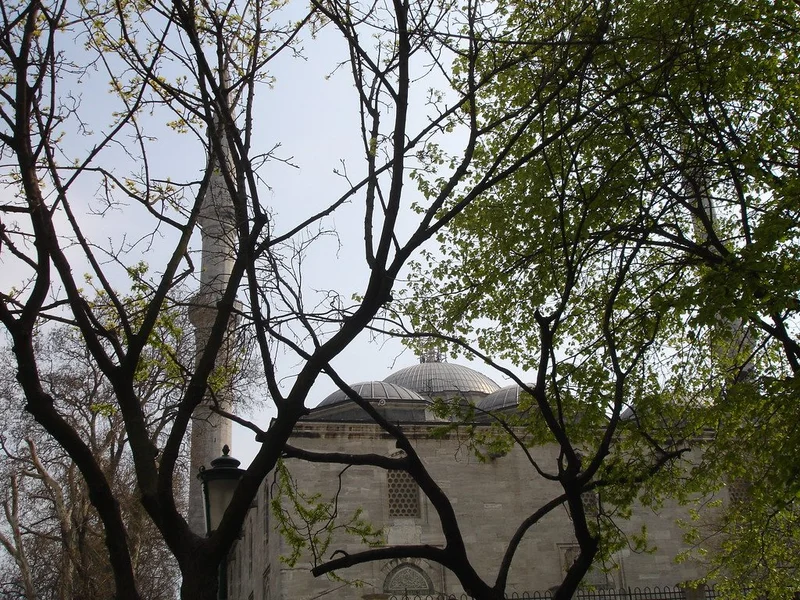
Fatih Mosque stands on the site of the Byzantine Church of the Holy Apostles and holds the tomb of Mehmed II, the sultan who took the city in 1453. Many guests know the hadith praising the commander who would conquer Constantinople, and the conqueror's tomb is where that story becomes physical. The present mosque was rebuilt after the 1766 earthquake, so it looks later than its date.
It is a working neighbourhood mosque with few tourists. That is its strength: you see how Istanbul families use a big imperial mosque on an ordinary day, with students in the courtyard and old men on the benches. Entry is free.
From Fatih it is a short drive to the old land walls, where the 1453 siege was fought, and on to Ayvansaray for the companions' tombs. We usually put Fatih, the walls, Ayvansaray and Eyüp together on day two, with a car and driver from $220 per group for 8 hours.
A one-day and a two-day private route with times
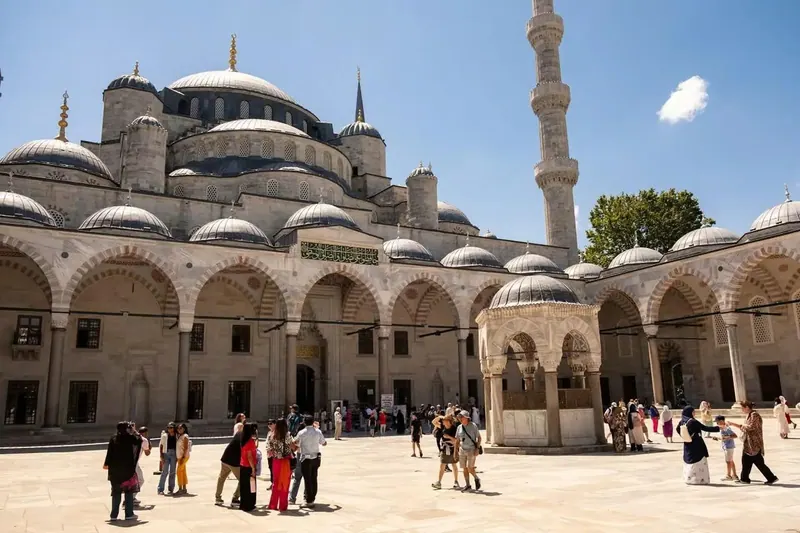
Best of Istanbul Private Tour, 1-3 Days, from $199 per group
Day one, Old City (any day except Tuesday). 08:45 meet your guide at your hotel lobby or at the German Fountain in Sultanahmet. 09:00 Topkapı, straight to the Sacred Relics, then the third courtyard. 11:30 Hagia Sophia gallery route. Dhuhr in Hagia Sophia or the Blue Mosque, then lunch. 14:30 the Blue Mosque once it reopens, and the Hippodrome. 16:00 Süleymaniye and the tombs of Süleyman and Hürrem; pray asr there before sunset over the Golden Horn.
Day two, the Golden Horn. 09:30 Fatih Mosque and the tomb of Mehmed II. 10:45 the land walls at Edirnekapı. 11:30 Ayvansaray and the tomb of Abu Shayba al-Khudri. Dhuhr (or jumu'ah on a Friday) at Eyüp Sultan, then the tomb of Abu Ayyub al-Ansari and the cemetery. 15:00 cable car to Pierre Loti for tea. 16:30 Yeraltı Camii in Karaköy on the way back. In the evening, a one-hour whirling dervish ceremony, one of our religious tours in Istanbul, shows the Sufi side of Ottoman culture.
The Best of Istanbul private tour is built exactly for this: 1, 2 or 3 days at 7 hours per day, licensed guide, route changed to suit you. Hotels outside the centre need a private vehicle, which we add for an extra fee.
Prayer times, Friday prayer and dress code
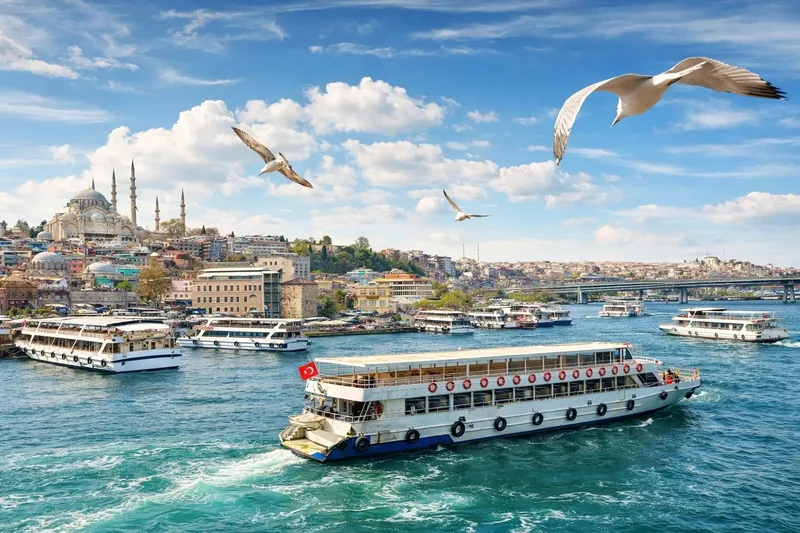
Religious tours in Istanbul, from $60 per person
Mosques close to sightseeing visitors for a short time around each prayer, but you can always join the prayer itself. In Istanbul, dhuhr falls around 12:15 in winter and 13:15 in summer, and the Friday sermon starts just before it. On a Friday, plan Eyüp or Süleymaniye for jumu'ah and avoid queuing at the Blue Mosque, which stays closed to tourists until mid-afternoon.
Dress is simple: shoulders and knees covered for everyone, a headscarf for women inside mosques and at the tombs. Loan scarves and wraps are offered at the Blue Mosque and Hagia Sophia doors. Shoes come off at the entrance; carry a small bag for them. Our page on what to wear in Istanbul has a packing list by season.
Halal food is the default almost everywhere in the Old City, and wudu facilities are found at every mosque. For more on halal meals, prayer stops on longer trips and private transport for families, see our guide to Muslim-friendly Turkey tours.
How much does an Islamic tour of Istanbul cost?
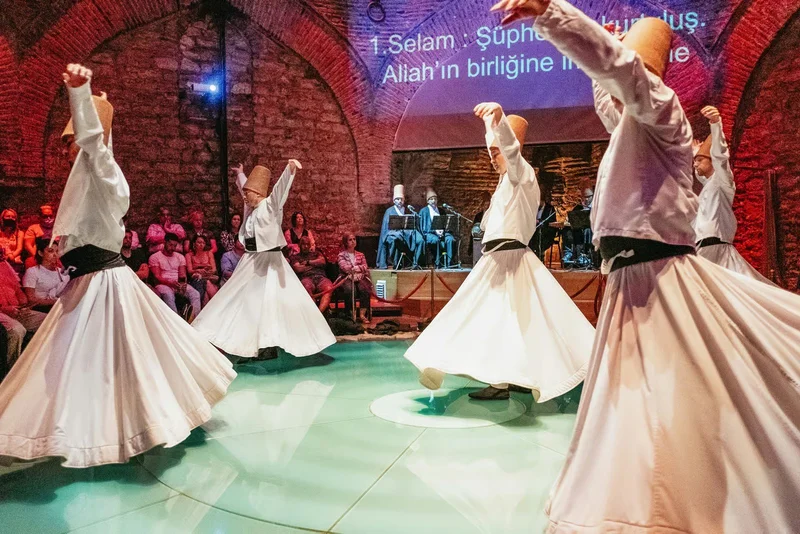
Whirling Dervish Ceremony in Istanbul, from $60
Group sahaba tours sold on the big booking sites usually last 4 to 5 hours and cover Eyüp plus one or two other tombs; in October 2026 a small-group Golden Horn and Eyüp tour was listed on Travelocity at about $87 per adult. A private guide costs more for one person but less per head for a family, and you are not tied to a group's prayer schedule.
| Our tour | Duration | Good for | From |
|---|---|---|---|
| Best of Istanbul private tour | 1–3 days, 7 h per day | Full Islamic history route, day one and day two | $199 per group |
| Classic Istanbul private tour | 6–8 hours | Hagia Sophia, Blue Mosque, Topkapı in one day | $200 |
| Private Basilica Cistern tour, optional Topkapı and Hagia Sophia | 6–8 hours | Cistern ticket included, Topkapı added on request | $150 per person |
| Private city tour by Mercedes Vito | 8 hours | Eyüp, Ayvansaray, Fatih by car, 1–6 people | $220 per group |
| Whirling dervish ceremony | 1 hour | Evening Sufi music and sema | $60 per person |
Museum tickets, meals and tips are not included on the guided tours. Prices vary by season, group size and what's included, so ask us for today's price for your dates. You can see every faith-related day trip, including Edirne's Selimiye Mosque and Konya, in our religious tours list, and all private city routes under Istanbul tours.
To book, send your dates, the number of adults and children, and whether you want an Arabic-speaking guide through our contact page, or message us on WhatsApp. We confirm the guide, the route and the prayer stops in writing before you pay.
Frequently Asked Questions
Which companion of the Prophet is buried in Istanbul?
Abu Ayyub al-Ansari, who hosted the Prophet in Medina, is the companion most firmly linked to Istanbul. He died during an Umayyad campaign against Constantinople and is buried in Eyüp, beside the Eyüp Sultan Mosque that Mehmed II built in 1458. Other graves at Ayvansaray and Karaköy carry companions' names by tradition.
How many sahaba are buried in Istanbul?
There is no agreed number. Some popular sources say more than a thousand companions are buried around Ayvansaray, but historians identify only a few dozen named graves, and several are honorary maqams rather than proven burials. The documented core is Abu Ayyub al-Ansari in Eyüp, with Abu Shayba al-Khudri at Ayvansaray close behind.
Where is the cloak of Prophet Muhammad in Istanbul?
The Blessed Mantle (Hırka-i Saadet) is kept in the Sacred Relics rooms in the third courtyard of Topkapı Palace, open daily except Tuesdays with a palace ticket. A second mantle, the Hırka-i Şerif, is kept in the Hırka-i Şerif Mosque in Fatih and can be visited only during Ramadan.
Is Topkapı Palace open on Tuesday?
No. Topkapı Palace is closed every Tuesday, and the Sacred Relics rooms close with it. Plan the palace for another day and use Tuesday for Eyüp, Fatih and the Golden Horn, which are mosques and stay open. On other days, arrive at opening and go to the relics first, before the queue builds.
Can tourists pray in Hagia Sophia?
Yes. Hagia Sophia has been a working mosque since 2020, and Muslim visitors can join any of the five prayers in the main hall. Sightseeing visitors who want to see the building outside prayer use a separate gallery route, which costs €25 for foreign visitors. Women pray in a screened section and need a headscarf.
Is Eyüp Sultan Mosque free to visit?
Yes, Eyüp Sultan Mosque and the tomb of Abu Ayyub al-Ansari are both free. The mosque closes to sightseeing for a short time at each prayer, and Fridays, weekends and Ramadan evenings are very crowded. A weekday morning before 11:00 is the quietest time, and the tomb has its own entrance across the courtyard.
How long does an Islamic history tour of Istanbul take?
Plan one full day for Topkapı's Sacred Relics, Hagia Sophia, the Blue Mosque and Süleymaniye, and a second day for Fatih, Ayvansaray and Eyüp Sultan. Our private guide works 7 hours per day, so each day fits comfortably around dhuhr and asr, with time for lunch and a tea at Pierre Loti.
What should women wear to visit mosques in Istanbul?
Women should cover their arms, legs and hair inside mosques and at the tombs; a long skirt or loose trousers, long sleeves and a headscarf are enough. Free loan scarves and wraps are offered at the Blue Mosque and Hagia Sophia, but bringing your own is easier, and shoes come off at the door.
Private tours in Istanbul
Classic Istanbul Full-Day Private Tour: Byzantine & Ottoman
Istanbul's great Byzantine and Ottoman landmarks in one private day, from Topkapi Palace and Hagia Sophia to the Grand Bazaar.
Best of Istanbul Private Tour, 1-3 Days with Professional Guide
A licensed private guide for 1, 2 or 3 days in Istanbul: the Old City, the Bosphorus and the Golden Horn, planned around your interests.
Related guides
- Istanbul 2 Day Itinerary 2027: Hour-by-Hour Plan with Ticket Prices
- Istanbul 2 Day Tour 2027: Private Guided Itinerary, What's Included and Prices
- Istanbul 3 Nights 4 Days Itinerary for Korean Travellers: Route, Tickets and Transport
- Istanbul 3-Day Itinerary: A Realistic Plan for First-Timers
- Istanbul 5-Day Itinerary 2027: Day by Day for Gulf Families, with Prices
- Istanbul 7-Day Program 2027 for Gulf Families: Day by Day
- Istanbul Airport Car Rental: Rent a Car or Book a Car with Driver
- Istanbul Airport Meet and Greet: Name-Sign Pickup and Private Transfer
- Istanbul Airport Minibus Transfer for Families and Groups up to 6
- Istanbul Airport Private Transfer: Price, Timing and Meeting Point
- Istanbul Airport Shuttle: Havaist Buses, Routes and Private Shuttle Options
- Istanbul Airport Taxi: Fares, Taxi Types and When a Private Transfer Is Better