

 Ephesus
Temple of Artemis (Artemision)
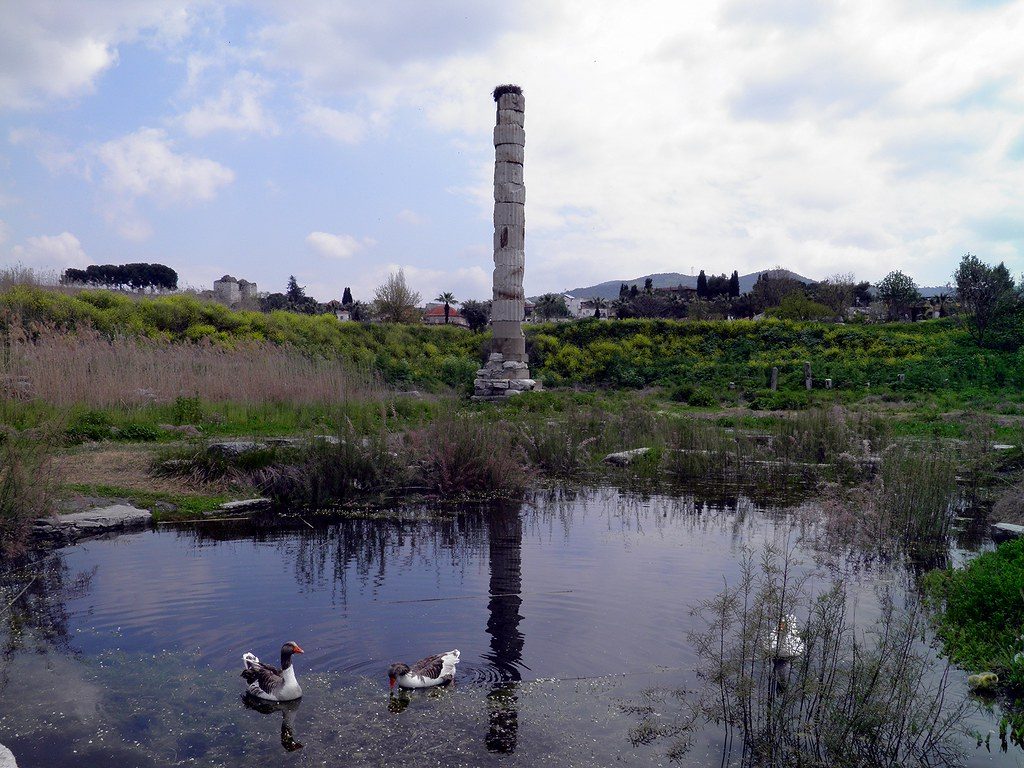
The Temple of Artemis near Selcuk was one of the Seven Wonders of the Ancient World; today a single re-erected column stands in a marshy field on its site. Entry is free, and a visit takes about 20 minutes on the way to or from Ephesus.
Tours that visit Temple of Artemis
Ephesus & Pamukkale 2-Day Tour: Flights & Lunch Included
Two days from Istanbul to Ephesus and Pamukkale with flights, a night in a Pamukkale hotel, a licensed guide, entrance fees and lunches.
Cappadocia, Pamukkale & Ephesus 5-Day Tour, Lunch Included
Five days from Istanbul to Cappadocia, Pamukkale and Ephesus with domestic flights, hotels, guided tours, breakfasts and lunches.
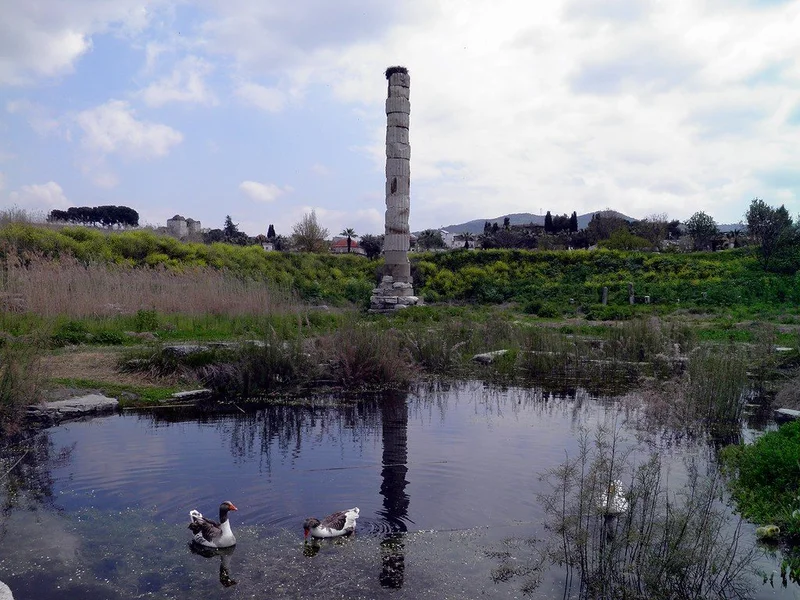
One column. That is what is left standing of the Temple of Artemis, a building that ancient writers ranked among the Seven Wonders of the World and that was larger than the Parthenon in Athens. The column was pieced together from fragments and re-erected on the site, in a low, often waterlogged field on the edge of Selcuk, about 3 kilometres from Ephesus. Entry is free. It takes 20 minutes, and it works best as a short stop with some imagination.
Quick facts
| Item | Details |
|---|---|
| Opening hours | Open site, roughly 08:00-19:30 in the main season (as of October 2026; check before you go) |
| Closed | No fixed closing days reported |
| Ticket | Free |
| Time needed | 15-30 minutes |
| Location | Selcuk, on the road between the town centre and Ephesus, about 3 km from the Ephesus Lower Gate |
| What to wear | Nothing special; mosquitoes can be a nuisance in summer evenings |
A short history
Artemis was the chief goddess of Ephesus, worshipped here in a form older and more local than the Greek huntress, often shown covered in rows of egg-like shapes. A sanctuary existed on this spot from at least the 8th century BC. In the 6th century BC, the great marble temple was built, with support from King Croesus of Lydia, whose name became a byword for wealth.
In 356 BC a man called Herostratus set fire to the temple so that his name would be remembered, which it has been, despite a ban on speaking it. Legend says it burned on the night Alexander the Great was born. The Ephesians rebuilt it on an even larger scale, with more than a hundred columns. This second temple was damaged in a raid by the Goths in 262 AD, and over the following centuries its marble was reused in other buildings, including, by tradition, the Basilica of St John on the hill above and churches in Constantinople.
The site was lost under silt until the English engineer John Turtle Wood found it in 1869 after years of searching. Many of the finds went to the British Museum in London, where carved column drums from the temple are on display.
What to see
- The column. Assembled from drums found on the site, it gives a sense of the height of the original columns, although it is shorter than they were.
- The foundations. Blocks and fragments lie around the marshy ground, often with storks nesting on top of the column and turtles and frogs in the water.
- The view. From the site you can see the Isa Bey Mosque and the Basilica of St John on Ayasuluk Hill, with the Byzantine castle above. Layer upon layer of Selcuk's history appears in one frame.
Where to see more
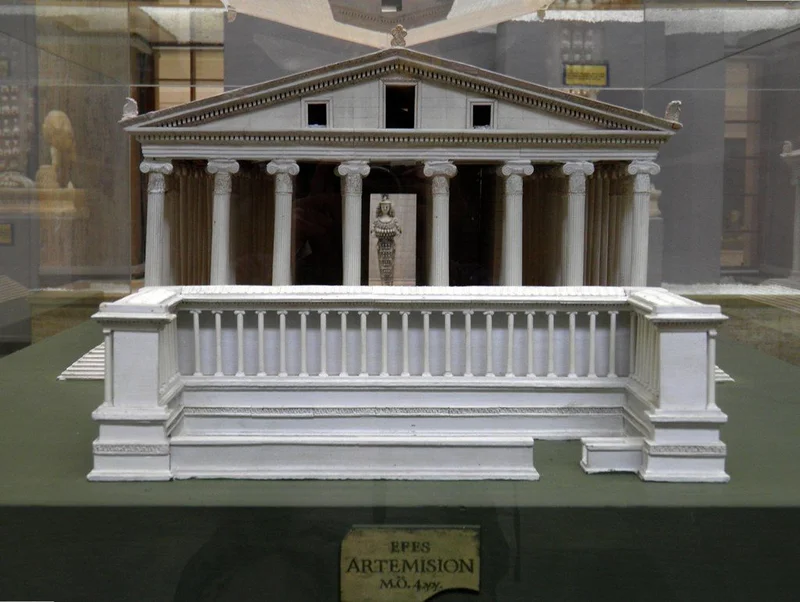
For an idea of what the temple looked like, go to the Ephesus Museum in Selcuk, which displays statues of Artemis found at Ephesus and a scale model of the temple. The British Museum in London holds some of the finest sculptured pieces. The Miniaturk park in Istanbul also has a model.
Best time to visit
Any time of day works. Early morning and late afternoon have softer light for photographs of the column against the hills. After winter rains the site floods, which makes the reflections better but the ground impassable.
Our 5-Day Seven Churches of Revelation Biblical Tour in Turkey visits the Temple of Artemis as part of a private journey through western Turkey, from US$760. The 2-Day Ephesus & Pamukkale Tour from Istanbul with Flights also stops here, from US$675. For a longer pilgrimage, see Footsteps of St Paul: Private Biblical Turkey Tour.
Tips
- Combine the stop with the Basilica of St John and the Isa Bey Mosque, a ten-minute walk away.
- Souvenir sellers wait at the entrance. The replica Artemis statues are cheaper in Selcuk's shops.
- Bring insect repellent in summer.
More sights in the area are on our Ephesus and Kusadasi destination page.
Frequently Asked Questions
Is there anything left of the Temple of Artemis?
Only foundations, scattered blocks and a single column reassembled from fragments. Some sculptured pieces are in the British Museum.
Is the Temple of Artemis free?
Yes. It is an open site with no ticket office.
Is the Temple of Artemis worth visiting?
As a short stop, yes, for its place in history. Visitors expecting ruins like Ephesus will be disappointed; allow 20 minutes and combine it with nearby sights.
Why was the Temple of Artemis a Wonder of the World?
For its size and decoration. It was one of the largest temples of the Greek world, built of marble with more than a hundred columns, and ancient writers praised it above the other Wonders.
Who destroyed the Temple of Artemis?
It was burned by Herostratus in 356 BC, rebuilt, damaged by Gothic raiders in 262 AD, and then slowly dismantled for building stone over the following centuries.