

Prices & CostsIstanbul23 October 202614 min read
DHI vs FUE Hair Transplant in Turkey: Which Is Better, 2027 Costs
DHI vs FUE in Istanbul: how the implanter pen differs from FUE channels, which suits your hair loss, price gap, healing and a 3-day plan from €1,250.
In this article
- DHI vs FUE at a glance
- How FUE works, step by step
- How DHI works, and where the pen helps
- DHI vs FUE: which method suits your hair loss
- DHI vs FUE cost in Turkey
- Results, density and healing compared
- Risks and red flags with either method
- A 3-day DHI or FUE trip to Istanbul
- Travelling from abroad
- How we help you choose
- Frequently Asked Questions
DHI vs FUE comes down to one step: both methods remove follicles from the back of the head the same way, but FUE puts them into channels the surgeon has already cut, while DHI loads each graft into a pen that opens the hole and places the graft in one movement. In Istanbul, DHI usually costs a few hundred euros more than FUE for the same number of grafts, takes longer per session and suits hairline work and unshaven cases best, while FUE or sapphire FUE is the usual choice for large bald areas.
In the DHI vs FUE debate, neither method is "better" in the abstract. The surgeon, the donor area and the honesty of the graft count decide the result far more than the name on the brochure. The rest of this guide compares the two step by step, with Istanbul price ranges, the 3-day trip plan our partner clinics use, and the questions to ask before you choose.
Market prices below come from published 2026 price guides of Istanbul hospital groups and clinic platforms, read in October 2026. Our own figures come from our medical travel packages page. Nothing here is a medical opinion or a quote: the clinic gives the final plan and price in writing after a doctor has looked at photos of your scalp.
DHI vs FUE at a glance
| FUE (incl. sapphire FUE) | DHI (Choi implanter pen) | |
|---|---|---|
| How grafts come out | Micro-punch, about 0.7–1.0 mm | Same micro-punch |
| How grafts go in | Surgeon opens all channels first, then grafts are placed with forceps | Pen opens each channel and places the graft in one step |
| Typical session size | 3,000–4,500+ grafts | Often capped around 3,000–3,500 |
| Session length | 6–8 hours | 7–9 hours for a similar count |
| Shaving | Usually full shave | Recipient area can often stay unshaven |
| Best for | Large bald areas, crown, high graft counts | Hairline, small or dense areas, filling between existing hair |
| Istanbul market price | About €1,800–€5,000 all-inclusive | Usually a few hundred euros more than FUE |
| Our partner clinics | Packages from €1,250 | Quoted after photos |
| Days in Istanbul | 3 | 3 |
How FUE works, step by step
FUE stands for follicular unit extraction. After local anaesthetic, the team removes grafts one by one from the donor area at the back and sides of the head with a hollow micro-punch. Each graft holds one to four hairs. They sit in a cooled storage solution while the surgeon moves to the front.
Then comes the part patients rarely ask about, and it matters most. The surgeon cuts every recipient channel in advance, choosing the angle, depth and direction of each one. That pattern is the hairline. A good surgeon follows the natural swirl of the crown and the soft, irregular edge of a real hairline; a rushed one cuts neat rows that look planted ten years later.
Finally, technicians place each graft into its channel with fine forceps. A typical FUE session of 3,000 to 4,000 grafts takes six to eight hours, with a lunch break in the middle. Because channel opening and placement are separate jobs, a well-staffed team can handle large sessions efficiently, which is one reason FUE remains the default for men with Norwood 5 or 6 hair loss.
What "sapphire FUE" changes
Sapphire FUE is still FUE. The only difference is the blade used to open the channels: a sapphire tip instead of steel. Clinics say the sapphire blade makes smaller, cleaner V-shaped incisions that heal slightly faster and allow grafts to sit closer together. That claim is plausible, but there are no large independent studies proving better growth. In Istanbul in 2026, most mid-range and premium clinics offer sapphire channels as standard, so treat it as a normal feature rather than a reason to pay a big premium.
How DHI works, and where the pen helps
DHI means direct hair implantation. Extraction is identical to FUE: same punch, same donor area, same counting. The difference starts after that. Each graft is loaded into the hollow needle of an implanter pen, often called a Choi implanter after the South Korean design it comes from. The surgeon presses the pen into the scalp at the chosen angle, and the plunger pushes the graft in as the needle withdraws. Channel and placement happen in one movement.
That gives the surgeon very fine control over angle and depth at each single point, and it means grafts spend less time outside the body between extraction and placement. It also lets the team work between existing hairs without cutting a whole field of channels first, which is why DHI is popular for unshaven or partly shaven procedures, for a lower hairline, and for densifying thinning areas where native hair is still present.
The trade-off is speed. Loading pens one graft at a time is slow work, and the surgeon (or a senior technician under the surgeon) has to handle the placement personally. Acıbadem's international patient guide notes that many surgeons cap DHI at roughly 3,000 to 3,500 grafts per session for that reason, so someone who needs 5,000 grafts may be advised to split the work or combine methods.
The "unshaven DHI" detail most adverts skip
"No-shave DHI" usually means the recipient area at the front is not shaved. The donor area at the back normally still needs trimming, at least in strips hidden under longer hair. If staying invisible at work matters to you, ask the clinic in writing how much of the head will be shaved, and look at photos of a patient on day one, not month twelve.
DHI vs FUE: which method suits your hair loss
The table below reflects how Istanbul surgeons we work with usually explain the choice to patients. It is a starting point for your consultation, not a diagnosis.
| Your situation | Method surgeons often suggest | Why |
|---|---|---|
| Receding temples, otherwise good hair | DHI | Fine hairline control, can stay unshaven |
| Thinning on top, hair still present | DHI | Grafts go between existing hairs |
| Large bald crown and top (Norwood 5–6) | FUE or sapphire FUE | Higher graft numbers in one day |
| Very high graft need, 4,500+ | FUE, or FUE + DHI combined | DHI alone may need two sessions |
| Women with diffuse thinning | Often DHI, after medical tests | Unshaven work; see our guide to hair transplant for women in Turkey |
| Beard or eyebrow | Either, surgeon's preference | Very small, precise work |
| Weak or small donor area | Neither may be wise | Ask about medication and PRP first |
Many Istanbul clinics now offer combined sessions: FUE channels for the crown and mid-scalp, DHI pens for the first centimetre of the hairline. If a clinic insists only one method will work for everyone, that tells you more about its equipment than about your scalp.
DHI vs FUE cost in Turkey
DHI is usually the more expensive option, because it takes more skilled hours per graft. Published 2026 price guides from Istanbul hospital groups place all-inclusive FUE packages at roughly €1,800 to €5,000, with DHI typically a few hundred euros higher for the same graft count and premium sapphire or celebrity-surgeon clinics above that. A 2021 comparison in the Jerusalem Post put average FUE at about $2,100 and DHI at about $2,550 in Turkey; prices have moved up since, but the gap between the methods has stayed modest.
The gap between Turkey and home is far bigger than the gap between the methods. US clinics commonly charge $5 to $8 per graft, so 3,000 grafts can run to $15,000 or more. Acıbadem's patient guide puts UK and US prices at least 30 to 60 percent higher for the same operation. The same pattern holds in Germany and Canada.
Our partner clinics, including MedArt Hair, Natural Clinic and Vera Clinic, start from €1,250 for a hair transplant package arranged through us. The package page lists what that usually covers: 2,800 to 5,000+ grafts in one session, PRP and the medication kit, and the first wash and check at the clinic. Hotel nights, VIP transfers, an interpreter and flights are added according to your plan. Prices vary with the clinic, the surgeon, the method and the hotel category, so for a current figure send us your photos and we come back with written options.
Per-graft, flat-price and "unlimited grafts" offers
Istanbul clinics price in three ways. Some charge per graft, which is transparent but can push the count up. Others charge a flat price for "up to" a number, and a few advertise "unlimited grafts" for one price. Your donor area is never unlimited. A responsible surgeon tells you how many grafts can safely be taken and stops there, even if the price would allow more.
Results, density and healing compared
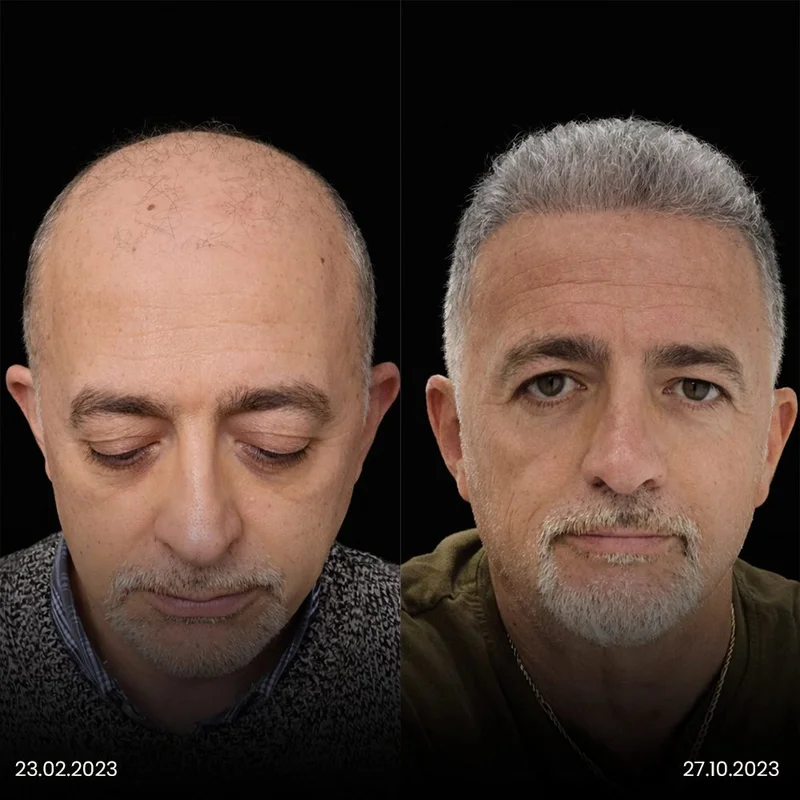
Density depends on how many grafts your donor area can give, how thick your hair is and how closely the surgeon places the channels. It does not depend on the brand of the technique. Acıbadem's own guide says there are no large, well-designed head-to-head studies showing that either DHI or FUE gives better graft survival or density, and the more honest clinic pages say the same thing in smaller print.
Healing follows a similar timeline for both, with DHI patients sometimes seeing slightly less redness in the first days because there are fewer open channels at once:
| Time after surgery | What usually happens |
|---|---|
| Day 1–3 | Swelling on the forehead, first wash at the clinic on day 2 or 3 |
| Day 7–10 | Scabs come off with gentle washing |
| Week 2–8 | "Shock loss": transplanted hairs shed, this is normal |
| Month 3–4 | New hair starts to appear, often fine at first |
| Month 6 | Visible change, many people stop styling around it |
| Month 12–18 | Final density and texture |
Our longer guide on hair transplant recovery in Turkey covers sleeping position, flights home, gym and hats week by week.
Risks and red flags with either method
Both methods are minor surgery under local anaesthetic, and most of the serious problems we hear about come from who does the work, not which tool they use. Turkish Ministry of Health rules require hair transplants to be performed by licensed doctors in authorised facilities. In practice, the busiest "hair factories" have been criticised for letting technicians do most of the surgeon's job across several patients at once.
Ask these questions before paying a deposit, whichever method you pick:
- Who opens the channels or holds the implanter pen, the named surgeon or a technician?
- How many patients does the team operate on per day?
- What is my estimated graft count, and how was it calculated from my donor area?
- How much will be shaved, front and back?
- Which channels are used for FUE: steel, sapphire, or DHI pens, or a mix?
- What happens if growth is poor at 12 months, and is that written down?
- Can I see day-one photos, not only finished results?
Our page on whether a hair transplant in Turkey is safe goes further into licences, accreditation and overharvesting, and how to choose the best hair transplant clinic in Turkey compares clinic types by budget.
A 3-day DHI or FUE trip to Istanbul
Both methods fit the same short trip. This is the plan most of our medical guests follow, and it works for flights from London, Frankfurt, Riyadh or New York alike.
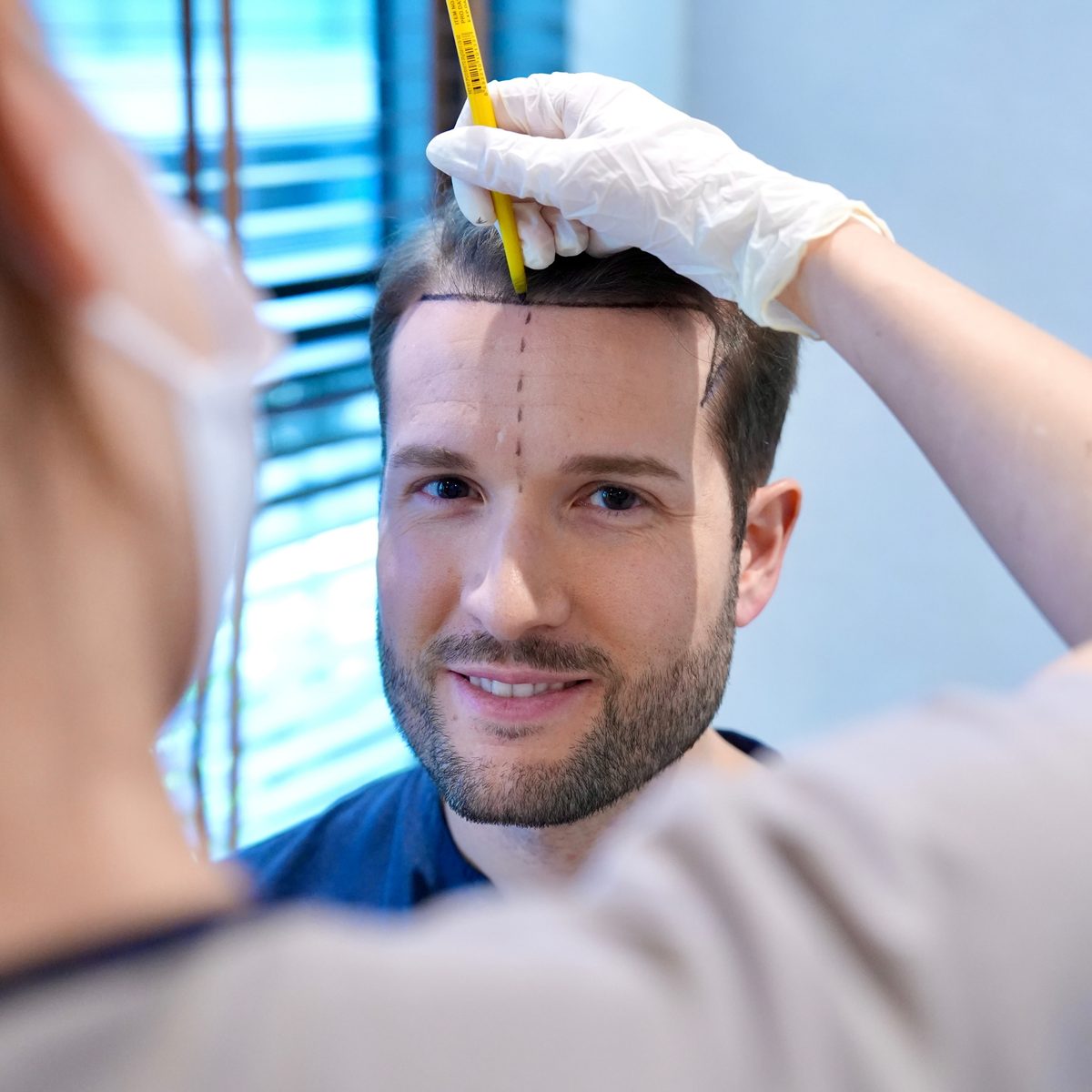
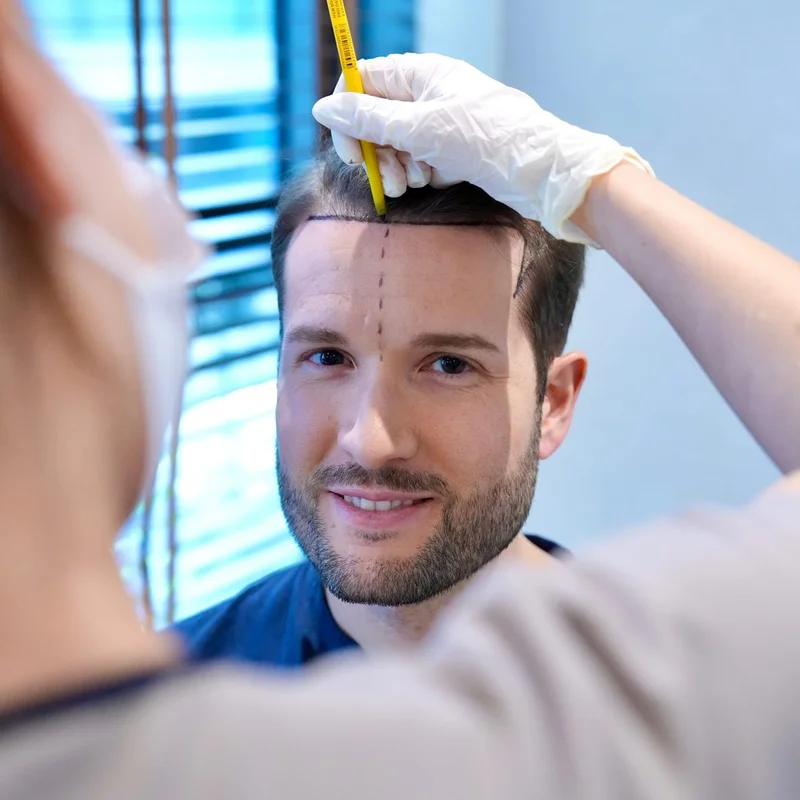
- Day 1, arrival. A driver meets you at Istanbul Airport or Sabiha Gökçen with your name on a sign and takes you to the hotel. Most patients do blood tests and the consultation the same afternoon, where the surgeon marks the hairline and confirms the method.
- Day 2, surgery. Pick-up around 08:00. Expect six to nine hours at the clinic, with lunch. You go back to the hotel with a headband and a small bag of medication.
- Day 3, first wash and check. The clinic washes the grafts, explains the home routine and hands over the aftercare kit. Many people fly home that evening or the next morning.
Patients who want a gentle extra day often add a short, seated outing that keeps the head out of the sun and away from crowds. A private 2-hour Bosphorus yacht cruise with shade on deck is the one our guests choose most, from $600 for the boat, and the driver can take you straight from the clinic to the pier. Airport runs are by private Mercedes Vito transfer, from $60.
Travelling from abroad
Entry rules for the main markets were checked in October 2026; always confirm with your airline before booking.
- UK, Germany and most EU passports: no visa for tourist or medical stays up to 90 days in any 180; German citizens can also enter with a national ID card. Flights from London take about four hours.
- USA and Canada: no visa needed for tourist stays of up to 90 days. Turkish Airlines flies nonstop from major US cities, around 10 hours from New York.
- Gulf countries: nonstop flights of about four hours from Riyadh, Dubai and Doha. Check the rule for your own passport on the Turkish foreign ministry's site.
Medical guests from the Gulf often ask about interpreters and female staff. Our partner clinics work daily with Arabic-speaking patients, and an interpreter can stay with you on surgery day. If you are planning dental work on the same trip, our guide to a Hollywood smile in Turkey explains why most people do not combine the two. For non-urgent health questions while you are here, see our notes on hospitals and pharmacies in Istanbul for tourists.
How we help you choose
We are a licensed Istanbul travel agency, not a clinic, and we do not push one method. You send photos of the front, top, crown and back of your head; we share them with two or three partner clinics that fit your budget, and you get written replies with the proposed method, estimated graft count and package price. We then book the hotel, transfers, interpreter and, if you want, flights.

Full details and starting prices for hair, teeth and nose treatments are on our medical travel packages page, and the hair transplant Turkey package page shows what a typical inclusive plan looks like. Our hair transplant Turkey cost page breaks the market price down by graft count. To start, send your photos on WhatsApp and say whether you lean towards DHI, FUE or want the surgeon to decide.
Frequently Asked Questions
Is DHI better than FUE?
DHI is not better than FUE in general; it is better suited to certain cases, such as hairline design, small areas and procedures where the recipient zone stays unshaven, while FUE handles large bald areas and high graft counts more efficiently. No large independent study shows higher growth with either method, so the surgeon's skill and your donor area matter more than the technique's name.
Which is more expensive, DHI or FUE?
DHI is usually more expensive than FUE because loading and placing each graft with an implanter pen takes more skilled time per graft. In Istanbul the difference is typically a few hundred euros for the same graft count, much smaller than the difference between Turkish and UK or US prices. Our partner clinic packages start from €1,250.
Does DHI require shaving?
DHI often allows the recipient area at the front to stay unshaven, because the pen places grafts between existing hairs without opening a whole field of channels first. The donor area at the back usually still needs to be trimmed, sometimes only in strips hidden under longer hair. Ask the clinic in writing how much of your head will be shaved.
How many grafts can be done with DHI?
Many surgeons cap a single DHI session at around 3,000 to 3,500 grafts, because placing each graft with a pen is slower than FUE placement. Some clinics advertise higher numbers. Patients who need 4,500 grafts or more are often offered FUE, a combined FUE and DHI session, or two DHI sessions several months apart.
Is sapphire FUE better than DHI?
Sapphire FUE and DHI solve different problems, so one is not simply better than the other. Sapphire FUE is FUE with channels opened by a sapphire blade, which suits large areas and high graft counts. DHI uses an implanter pen for precise single placements, which suits hairlines and unshaven work. Many Istanbul clinics combine the two in one session.
How long does it take to recover from DHI or FUE?
Most people return to desk work within three to seven days after either DHI or FUE, once swelling settles and scabs start to loosen. Scabs usually clear in seven to ten days, transplanted hairs shed between weeks two and eight, new growth appears from month three or four, and the final result shows at twelve to eighteen months.
Which hair transplant method is best in Turkey?
The best hair transplant method in Turkey is the one your surgeon recommends after examining your donor area, the size of the bald zone and your hair type, and many Istanbul clinics now use FUE, sapphire FUE and DHI together. Choose the clinic and the named surgeon first, then let the method follow your case.
Written by the Get Istanbul Tours team: licensed local guides and trip planners based in Istanbul.
Leave a Comment
Private tours in Istanbul
2-Hour Private Bosphorus Yacht Cruise for Your Group
Two hours on a private luxury yacht along the Bosphorus, with snacks on board and a professional guide telling the story of the city.
Istanbul Airport Private Transfer by Mercedes Vito, VIP
A private VIP transfer between Istanbul Airport and your hotel in a Mercedes Vito, with meet and greet and flight tracking.
Related articles
 Travel Tips
Where to Eat in Taksim 2027: Istiklal Street, Side Streets and What to Order, with Prices
Where to eat in Taksim: grill houses, meyhane streets, lokanta lunches and street food, with what to order and dinner costs of 1,200 to 3,000 TL.
Read More Itineraries
Istanbul 8 Day Itinerary 2027: Day by Day with Bosphorus, Islands, Bursa and Costs
Istanbul 8 day itinerary: Old City, Topkapi, Bosphorus, Princes' Islands and a Bursa day trip, with entrance fees and our 8-day private package from $1,499.
Read More Istanbul
Where to Eat in Beyoğlu 2027: Istiklal, Galata and Cihangir – Dishes, Prices, Streets
Where to eat in Beyoğlu by street and hour: Cihangir breakfast, Karaköy lunch and baklava, Nevizade meyhane dinner, with reported 2026 prices and a food tour from $90.
Read More