

 Eastern Turkey
Mount Nemrut (Nemrut)
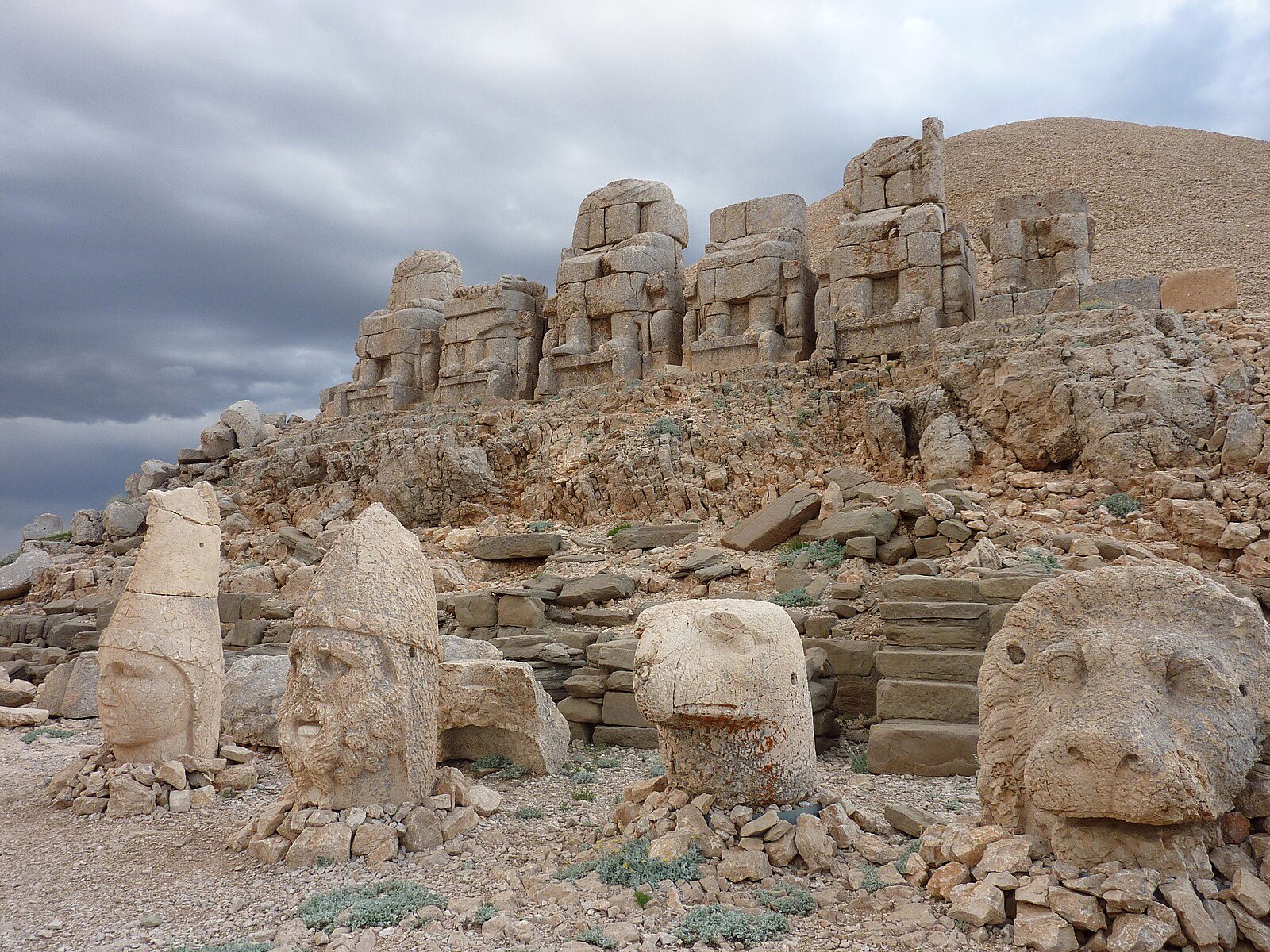
Mount Nemrut is a 2,134-metre peak in south-eastern Turkey topped by the burial mound of King Antiochus I of Commagene, with giant stone heads on its terraces. Entry is €10 in 2026; official hours are 09:00-18:00, and special early hours for sunrise apply in season.
Tours that visit Mount Nemrut
Nemrut & Gobeklitepe 2-Day Tour: Flights & Lunch Included
Two days from Istanbul to Mount Nemrut and Gobeklitepe with round-trip flights, a night in Sanliurfa, guides, tickets and lunches.
Southeastern Turkey Ancient Civilizations 9-Day Tour
Nine days through Gaziantep, Halfeti, Mount Nemrut, Sanliurfa, Gobeklitepe, Mardin and Diyarbakir, with hotels included.
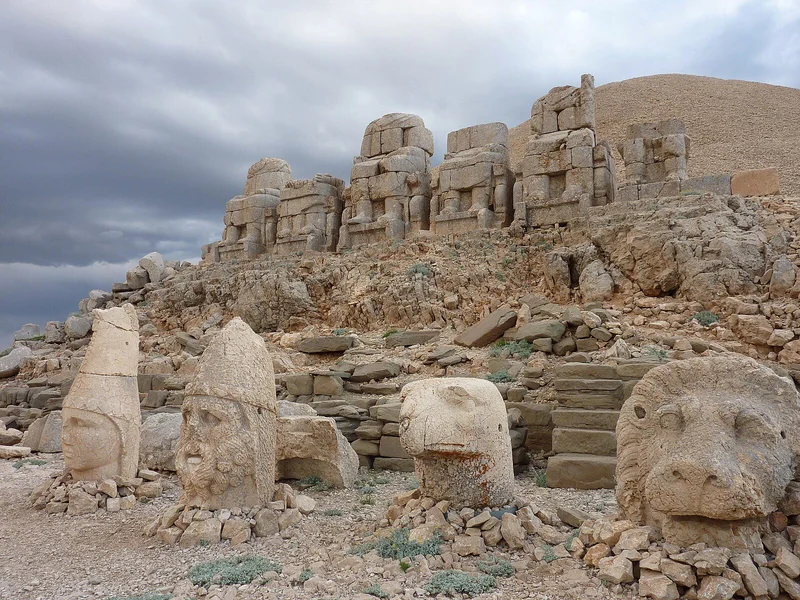
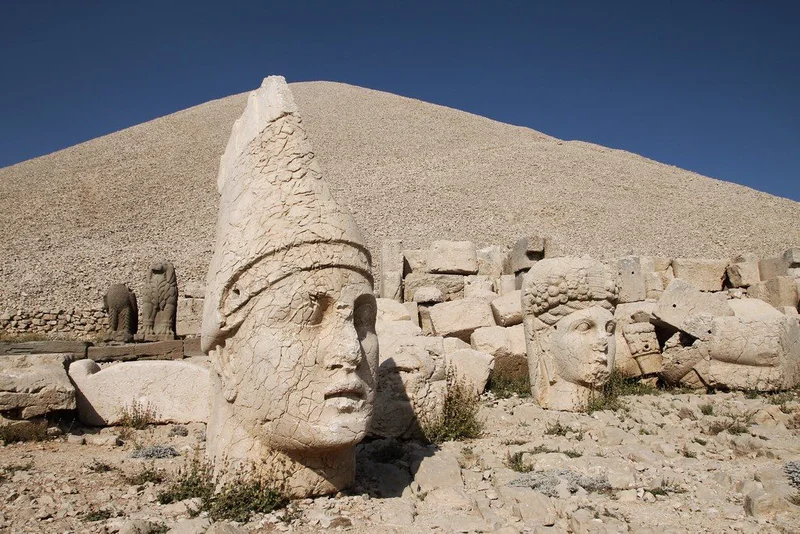
At 2,134 metres, on a bare summit in south-eastern Turkey, a king built himself a mountain. Antiochus I of Commagene, a small kingdom between Rome and Parthia, raised a cone of loose stones about 50 metres high over what is believed to be his tomb, and lined its terraces with giant seated statues of himself and the gods. Earthquakes toppled the heads, which now stand on the ground in rows, staring out over the plains. Watching the sun rise or set behind them is one of the great experiences of a trip to Turkey.
Quick facts
| Item | Details |
|---|---|
| Opening hours | 09:00-18:00 officially; hours change with sunrise and sunset (as of October 2026) |
| Closed | Open daily in season; the summit road is often closed by snow in winter |
| Ticket | €10 for foreign visitors (2026), including Arsameia |
| Time needed | 1.5 to 2 hours on the summit; a full day with the drive |
| Location | Adiyaman province, between Kahta and Malatya |
| What to bring | Warm clothes, even in summer; good shoes for the stony path |
History
Commagene was a small kingdom on the upper Euphrates. Its kings claimed descent from both the Persian royal house and Alexander the Great, and their art mixes Greek and Persian styles. Antiochus I, who ruled in the 1st century BC, created a religion of his own that joined Greek and Persian gods, and planned Nemrut as his sanctuary and resting place.
The statues show the king seated among Zeus-Oromasdes, Apollo-Mithras, Heracles-Artagnes and the goddess of Commagene, guarded by lions and eagles. A large relief of a lion covered in stars is often described as one of the oldest horoscopes in the world. The kingdom was absorbed by Rome in 72 AD, and the sanctuary was forgotten until 19th-century travellers reported it. UNESCO listed the site in 1987.
What to see
- The east terrace. The best-preserved row of seated bodies, with the fallen heads lined up in front. This is where people watch the sunrise.
- The west terrace. More heads, closer to the ground and easier to see in detail, and the relief of the lion horoscope. The sunset view is here.
- The tumulus. The cone of broken stone itself, which no one has managed to excavate down to a burial chamber.
- Arsameia. Included in the ticket, a site on the lower slopes with a large relief of Antiochus shaking hands with Heracles and a long Greek inscription.
- The Cendere Bridge. A Roman bridge on the road from Kahta, still in use for pedestrians.
Sunrise or sunset?
Sunrise is the classic choice. It means leaving Kahta or Karadut in the dark, around 02:30 to 04:00 depending on the season, and waiting in the cold on the east terrace. Sunset is easier and often less crowded, with light on the west terrace heads. The official site lists early opening hours for its night museum programme; check how sunrise access works for foreign visitors before you plan. Whatever you choose, take a warm jacket: even in August the summit can be close to freezing before dawn.
The walk
From the car park and cafe near the summit, a rough path climbs to the terraces in about 20 minutes. It is steep for a short stretch and the air is thin, so go slowly. There is no shade and the wind can be strong.
Best time to visit
The summit is usually reachable from about May to October. In winter, snow often closes the upper road. June to September brings the most stable weather; autumn is quieter.
Our 2-Day Nemrut & Gobeklitepe Tour with Flights flies from Istanbul, visits Mount Nemrut and Gobeklitepe and stays a night in Sanliurfa, from US$1,050. The Private Mt. Nemrut & Gobeklitepe Tour from Istanbul with Flights covers the same with your own guide. For a longer journey, the Ancient Civilizations of Southeastern Turkey Tour spends nine days between Gaziantep, Nemrut, Sanliurfa and Mardin.
Tips
- Stay overnight in Kahta or Karadut to be close to the summit for sunrise.
- Bring a torch for the path in the dark.
- Combine the trip with Gobeklitepe, about three hours' drive south.
- Snacks and tea at the summit cafe are basic; bring water.
Frequently Asked Questions
How much is the ticket for Mount Nemrut?
€10 for foreign visitors in 2026. The ticket also covers the nearby site of Arsameia.
When is Mount Nemrut open?
The summit is usually accessible from spring to autumn. Official hours are 09:00-18:00, changing with sunrise and sunset; in winter the road is often closed by snow.
Is sunrise or sunset better at Mount Nemrut?
Sunrise on the east terrace is the classic choice, but sunset on the west terrace is easier and often quieter. Both are memorable.
How hard is the walk to the top of Mount Nemrut?
About 20 minutes on a rough, stony path from the car park. It is short but steep and at high altitude.
Where should I stay to visit Mount Nemrut?
In Kahta or the village of Karadut, both closer to the summit. Malatya is an option on the northern side.