

 Konya
Mevlana Museum (Rumi)
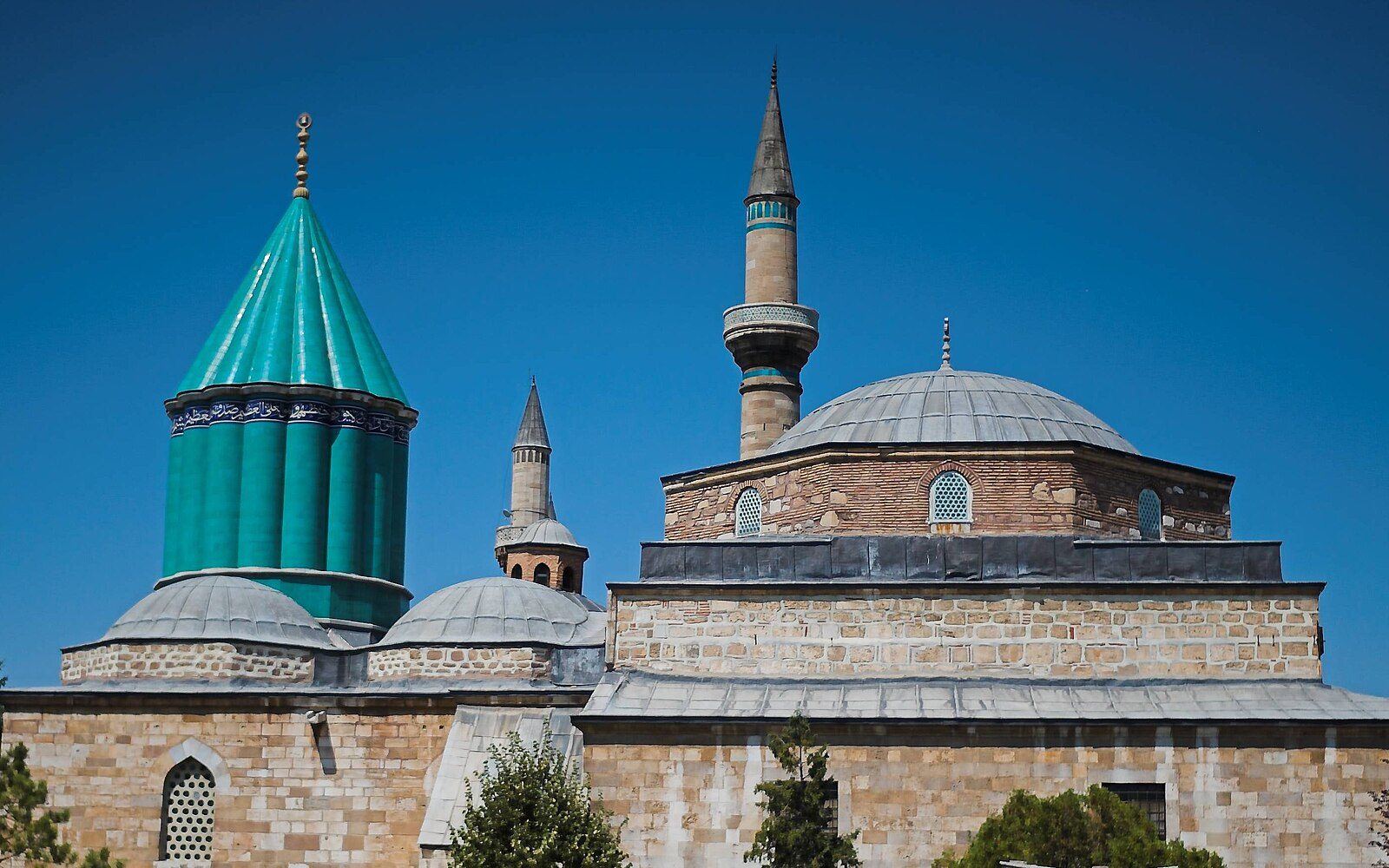
The Mevlana Museum in Konya is the tomb of Rumi, the 13th-century Sufi poet, and the former lodge of the whirling dervishes, under its green tiled dome. Entry is free, and it is one of the most visited museums in Turkey.
Tours that visit Mevlana Museum
Turkey Tour Package 9 Days: Istanbul to Troy
Nine days from Istanbul through Cappadocia, Konya, Pamukkale, Ephesus, Pergamon and Troy, fully private and professionally guided.
Konya 1-Day Private Tour from Istanbul with Flights
Fly from Istanbul to Konya for a private day at the Mevlana Museum, Rumi's tomb and the city's historic madrasas and mosques.
Under the green tiled dome in the centre of Konya lies Jalal al-Din Rumi, known in Turkey as Mevlana, the 13th-century poet and mystic whose verses are read around the world. His tomb and the lodge of the Mevlevi order, the whirling dervishes, form the Mevlana Museum. Entry is free, and it is open every day. For many Turkish visitors it is a pilgrimage; for foreign visitors it is the best introduction to Sufism anywhere.
Quick facts
| Item | Details |
|---|---|
| Opening hours | 09:00-17:00, ticket office closes at 16:30; on Mondays the office opens at 10:00 (as of October 2026, muze.gov.tr) |
| Closed | Open every day |
| Ticket | Free |
| Time needed | 1-1.5 hours |
| Location | Konya city centre, at the east end of Mevlana Caddesi, next to the Selimiye Mosque |
| Dress code | Covered shoulders and knees; women cover their hair in the tomb; shoe covers are provided |
A short history
Rumi was born in 1207 in Balkh, in today's Afghanistan, and came to Konya as a young man with his father, a respected scholar, when the city was capital of the Seljuk Sultanate of Rum. He became a teacher and preacher, and his meeting with the wandering dervish Shams of Tabriz changed his life and inspired his poetry. His great work, the Masnavi, runs to some 25,000 couplets.
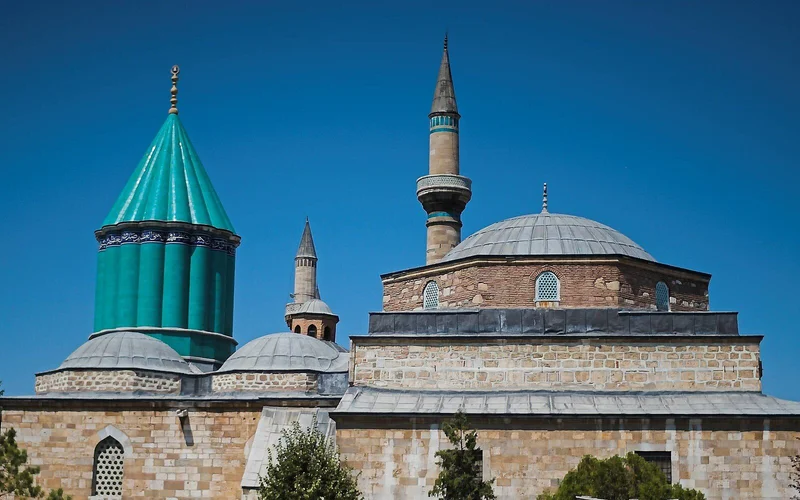
Rumi died on 17 December 1273. His followers built the tomb, and the Green Dome, over his grave, and his son Sultan Veled organised the Mevlevi order, with its music and the whirling ceremony, the sema. The lodge grew over the centuries with cells for dervishes, a kitchen and a mosque. In 1925 the Turkish Republic closed all Sufi lodges, and the building reopened as a museum in 1927.
What to see
- The tomb chamber. Rumi's sarcophagus is covered with embroidered cloth and a large turban, under the painted and gilded ceiling of the Green Dome. His father's tomb stands nearby, along with those of other members of the family and the order.
- The semahane. The hall where the whirling ceremony was performed, now displaying musical instruments, including the ney, the reed flute central to Mevlevi music, and dervish costumes.
- Manuscripts. Beautiful copies of the Masnavi and the Quran, some with gold illumination, in glass cases.
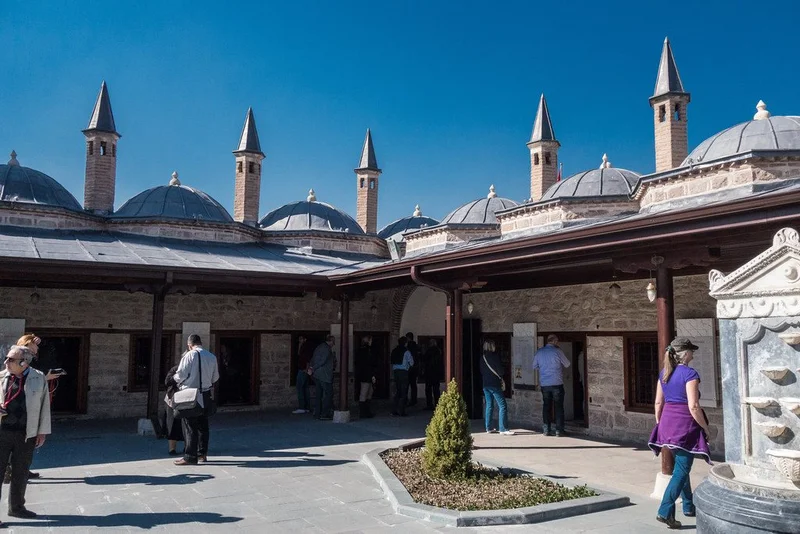
- The dervish cells. Around the courtyard, small rooms with figures show the daily life and training of the dervishes.
- The courtyard. A peaceful space with a fountain, rose beds and the cells' small domes.
The whirling ceremony
The sema is not performed inside the museum. Regular performances take place at the Mevlana Cultural Centre, a short walk away; check the current schedule. Each December, the city holds the Seb-i Arus, a commemoration of Rumi's death on 17 December, with nightly ceremonies over about ten days. It is the busiest time of year in Konya, and tickets and hotels sell out.
The ceremony is religious. Applause is not expected, and flash photography is not allowed.
Best time to visit
Weekday mornings are calmest. Friday, weekends and religious holidays bring large numbers of Turkish pilgrims, and the tomb chamber gets crowded. The courtyard is pleasant in spring and autumn; Konya's summers are hot and its winters cold.
Our 1 Day Private Konya Tour flies from Istanbul to Konya for a private day at the Mevlana Museum, Rumi's tomb and the city's old madrasas and mosques. Konya is also a stop on the overland 7 Days Turkey Tour Package and the 10 Days Private Turkey Tour Package, which link Cappadocia with Pamukkale.
Tips
- Photography is allowed in most rooms, but be respectful near the tomb and do not photograph people praying.
- Next door, the Selimiye Mosque is a fine 16th-century Ottoman building.
- Konya's other highlights, the Karatay Tile Museum and the Ince Minareli Madrasa, are 15 minutes away on foot.
- Try etli ekmek, the long thin meat flatbread, and a Konya speciality, firin kebab.
More sights in the city are on our Konya destination page.
Frequently Asked Questions
Is the Mevlana Museum free?
Yes. Entry is free, according to the museum's official page in October 2026.
What are the Mevlana Museum's opening hours?
It is open every day from 09:00 to 17:00. The ticket office closes at 16:30, and on Mondays it opens at 10:00.
Is Rumi buried in the Mevlana Museum?
Yes. His tomb lies under the Green Dome, next to his father's and those of other members of the Mevlevi order.
Can I see the whirling dervishes at the Mevlana Museum?
Not inside the museum. Ceremonies take place at the Mevlana Cultural Centre nearby and during the Seb-i Arus festival every December.
How do I get to Konya from Istanbul?
The flight takes a little over an hour. The high-speed train from Istanbul takes around four and a half to five hours.